

Bornite
Real bornite is coppery bronze under the tarnish and heavier (SG about 5.1).
- Bornite streak grayish black
- Natural bornite tarnish is usually more purple than gold
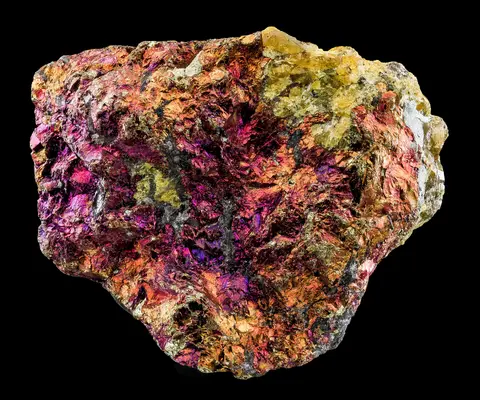
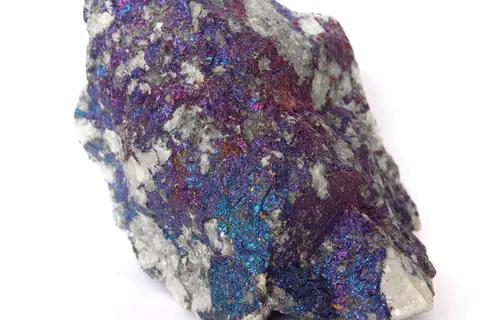
Peacock ore is a trade name for brightly iridescent copper sulfide pieces. Most of what is sold under the name is chalcopyrite treated with acid to create the colored tarnish, not bornite.
A variety of chalcopyrite. Prices checked .
Not enough data. We have not yet seen 5 or more current dealer listings for peacock ore in any one form, so we show no range rather than guess.
| Listing | Size | Locality | Asking | Seen |
|---|---|---|---|---|
| 1.5" Brilliantly Colored Peacock Ore (Chalcopyrite) FossilEra | 3.8 cm | $4 |
These are dealer asking prices: what shops list peacock ore for, not what it sells for and not an appraisal. Selling to a dealer usually brings well below retail, because the dealer has to resell it at a margin.
It is chalcopyrite (or occasionally bornite) whose surface has been tarnished, often artificially, to vivid blue, purple and gold. See chalcopyrite value for the species as a whole.
Real bornite is coppery bronze under the tarnish and heavier (SG about 5.1).
Rainbow hematite leaves a red brown streak and is much harder.
Also mistaken for peacock ore: covellite.
Very common
Occasional
Make a tiny scratch with a steel point on the underside and look with a loupe.
Can leave a small mark.
Rub on unglazed porcelain.
Can leave a small mark.
A stone that passes these tests is consistent with natural peacock ore, not proven. For valuable pieces, a gem lab report settles treatment and origin.
Prices: 1 current listings from FossilEra, seen 2026-11-20 to 2026-11-20. How we collect prices.