What red beryl is worth
Not enough data. We have not yet seen 5 or more current dealer listings for red beryl in any one form, so we show no range rather than guess.
Show 2 of the listings behind these numbers
These are dealer asking prices: what shops list red beryl for, not what it sells for and not an appraisal. Selling to a dealer usually brings well below retail, because the dealer has to resell it at a margin.
How to identify red beryl
Red beryl forms in rhyolite from gas-rich volcanic fluids rather than in pegmatites, and its crystals are small and typically included. See beryl value for the species as a whole.
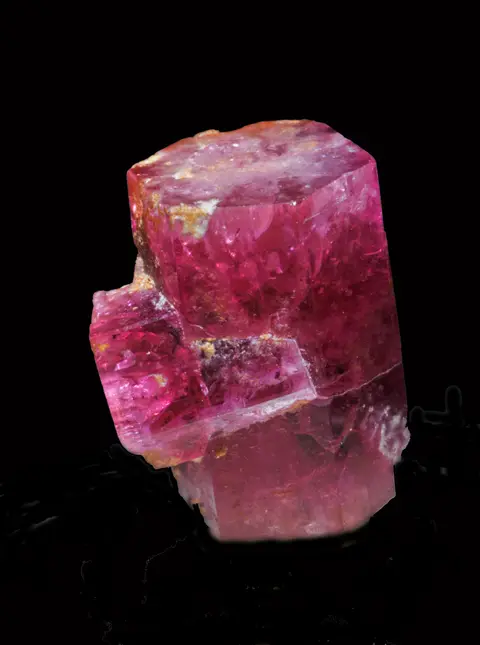
- Raspberry red to purplish red, a color no other beryl has naturally.
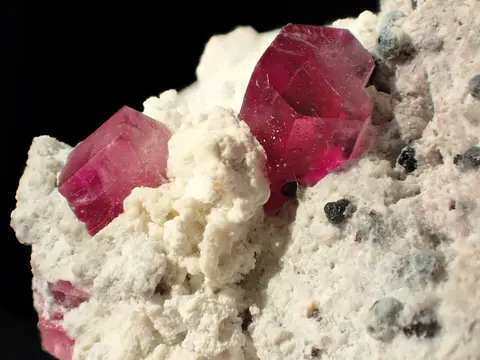
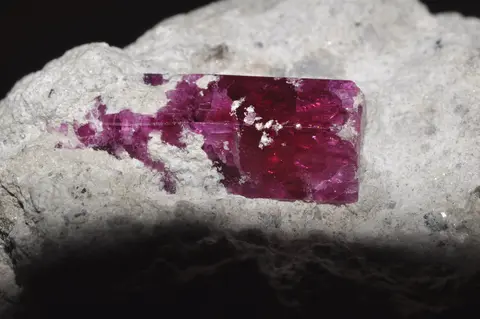
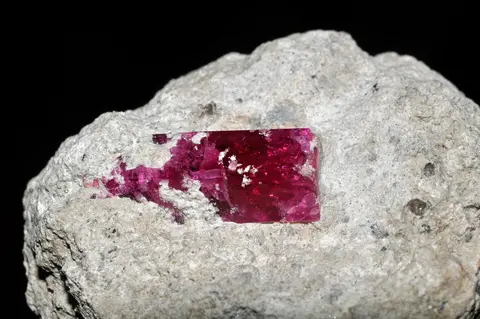
- Small, stubby six-sided crystals in cavities and fractures of pale rhyolite.
- Cut stones are usually small and contain fractures and fluid inclusions.
- Hardness 7.5 to 8 and SG about 2.66 to 2.70.
Where red beryl comes from
- Ruby-Violet claims, Wah Wah Mountains, Utah, USA
- The only commercial gem source.
- Thomas Range, Utah, USA
- Tiny crystals in topaz rhyolite, specimen grade only.
- Black Range, New Mexico, USA
- Small specimen crystals.
Red beryl lookalikes
Rubellite is heavier (SG 3.05), strongly dichroic, and commonly cleaner in larger sizes.
- Birefringence about 0.020
Spinel is singly refractive and heavier (SG 3.6).
Garnet is heavier (SG about 3.8) and singly refractive.
- Rounded dodecahedral crystals
Fake, dyed and treated red beryl
Hydrothermal synthetic red beryl
Occasional
- Chevron or wavy growth lines
- Cleaner and larger than natural material
- Lab confirmation needed
Pink beryl or morganite sold as red beryl
Occasional
- Morganite is pink to peach, never raspberry red
- Clean large pink stones are almost always morganite
Is my red beryl real? Tests you can do at home
-
Matrix check
Look at any rock attached to a specimen.
- Real
- Pale tan or white rhyolite with small cavities.
- Fake or lookalike
- Pegmatite feldspar or quartz suggests morganite or another mineral.
-
Specific gravity
Measure on a 0.01 g scale with water displacement (needs a stone of reasonable size).
- Real
- About 2.66 to 2.70.
- Fake or lookalike
- Tourmaline 3.05, spinel 3.6, garnet 3.8 or higher.
A stone that passes these tests is consistent with natural red beryl, not proven. For valuable pieces, a gem lab report settles treatment and origin.
Treatments
- Fracture filling (common)
- Improves the look of heavily fractured stones; lowers value compared with untreated. Flash effects or bubbles in fractures under magnification; lab report.
What moves the price of red beryl
- Size. Most cut stones are well under a carat; larger clean stones are very rare and valued accordingly.
- Clarity. Eye-clean red beryl is exceptional; most is included.
- Color. A saturated raspberry red without brownish or overly purple tones is preferred.
- Specimen quality. Sharp, undamaged crystals on white rhyolite are prized by collectors.
Questions collectors ask about red beryl
- What is a red beryl?
- Red beryl is the red variety of beryl, colored by manganese. It was formerly called bixbite, a name now avoided because it is easily confused with the unrelated mineral bixbyite.
- Where can you find red beryl?
- Gem red beryl comes from one commercial deposit in the Wah Wah Mountains of Beaver County, Utah. Tiny specimen crystals also occur in the Thomas Range of Utah and in New Mexico.
- Is red beryl worth anything?
- Yes. With a single commercial source and mostly tiny crystals, gem red beryl is one of the rarest colored stones, and clean stones over a carat are scarce. Size, clarity and color set value, as shown in the price table above.
Sources
Prices: 2 current listings from iRocks (The Arkenstone), seen 2026-11-20 to 2026-11-20. How we collect prices.