RockValues

Green amber value and identification

Green amber is amber with a green body color, and nearly all of it on the market is Baltic amber treated by heat and pressure in an autoclave, often with a dark backing in jewelry.

A variety of amber. Prices checked .
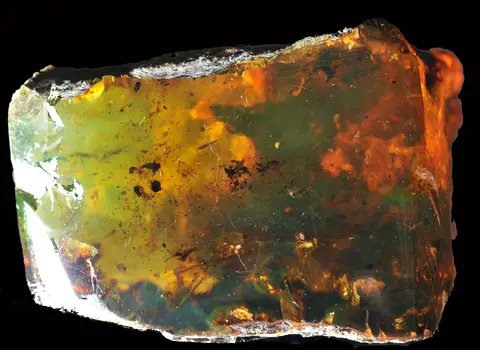
Green amber: Caribbean green amber
Caribbean green amber. Photo: The Singularity, CC BY 3.0, via Wikimedia Commons.
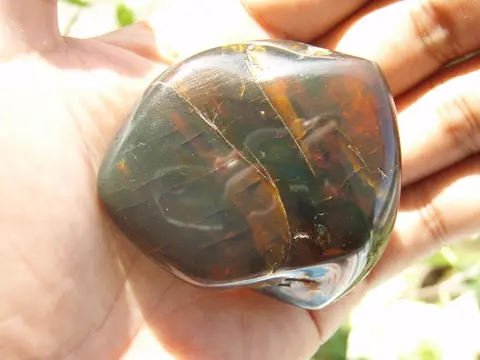
Green amber: Amber 4
Amber 4. Photo: Géry PARENT, CC BY-SA 3.0, via Wikimedia Commons.
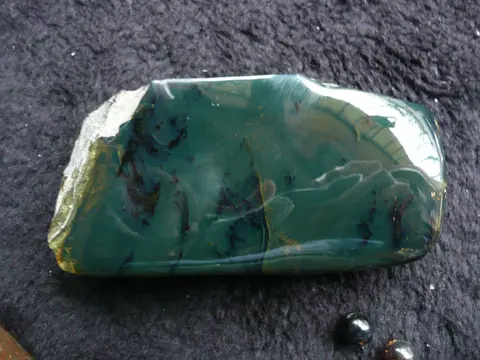
Green amber: Green South Sumatran amber
Green South Sumatran amber. Photo: Iskandarmato, Public domain, via Wikimedia Commons.

What green amber is worth

Not enough data. We have not yet seen 5 or more current dealer listings for green amber in any one form, so we show no range rather than guess.

These are dealer asking prices: what shops list green amber for, not what it sells for and not an appraisal. Selling to a dealer usually brings well below retail, because the dealer has to resell it at a margin.

How to identify green amber

Natural amber is rarely truly green; some Mexican and Dominican amber shows a green tint by fluorescence, but bright green jewelry amber is a product of treatment. See amber value for the species as a whole.

  • Olive to bright green, often with sun spangles.
  • Jewelry stones are frequently set closed-back on a dark backing that intensifies the green.
  • Same light weight and softness as other amber.

Other amber varieties

Where green amber comes from

Baltic region
Source of the raw amber treated to green.
Chiapas, Mexico
Some natural amber with a greenish tone or fluorescence.

Green amber lookalikes

Peridot

Peridot is cold, heavy and scratches glass.

  • SG 3.3
  • Hardness 6.5 to 7

Fake, dyed and treated green amber

  • Autoclave-treated green amber

    Very common

    • Sun spangles
    • Dark backing in closed settings
  • Green plastic

    Occasional

    • Sinks in salt water
    • Acrid smell with a hot point

Is my green amber real? Tests you can do at home

These are the tests for amber in general; they apply to green amber too.

  1. Salt water float test

    Stir salt into a glass of warm water until no more dissolves, let it cool, then drop the piece in (remove metal fittings first).

    Real
    Amber floats or hovers near the surface.
    Fake or lookalike
    Glass and most plastics sink; copal also floats, so this test alone does not rule out copal.
  2. Acetone drop test

    Put one drop of acetone or nail polish remover on a hidden spot, wait about 20 seconds, then touch it.

    Real
    Surface stays hard and smooth.
    Fake or lookalike
    Copal and some plastics become sticky or soften.

    Can leave a small mark.

  3. Long-wave UV torch

    In a dark room, shine a 365 nm UV torch on the piece.

    Real
    Glows bluish white, yellow or green, often brighter on fresh surfaces.
    Fake or lookalike
    Glass and many plastics show little or no glow, or an even, artificial glow.
  4. Static test

    Rub the piece briskly on wool or a cotton shirt for 30 seconds and hold it over tiny bits of tissue paper.

    Real
    Lifts the paper bits.
    Fake or lookalike
    Glass does not; some plastics also do, so use with other tests.
  5. Hot needle test

    Heat a needle tip and touch it to a hidden spot, holding the piece away from your face in a ventilated room.

    Real
    Gives off a piney resin smell and a small burned mark.
    Fake or lookalike
    Plastic smells acrid or chemical; copal melts quickly and smells sweeter.

    Damages the stone: test only an inconspicuous spot or a piece you do not mind marking.

A stone that passes these tests is consistent with natural green amber, not proven. For valuable pieces, a gem lab report settles treatment and origin.

Treatments

Autoclave heat and pressure (almost always)
Turns amber green; accepted when disclosed but valued below natural colors. Labs use infrared spectroscopy; spangles hint at it.

What moves the price of green amber

  1. Natural versus treated. Proven natural green is rare and valued well above treated green.
  2. Clarity and size. Clean, larger pieces.
  3. Setting. Silver or gold setting quality in jewelry.

Sources

Prices: no current dealer listings yet. How we collect prices.