


Baltic amber
Baltic amber fluoresces a weaker chalky blue-white, not the intense sky blue of Dominican material.
- Same SG and hardness
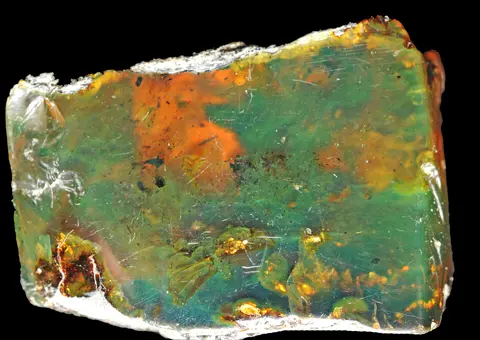
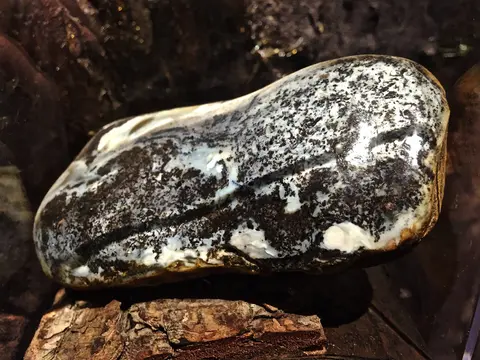
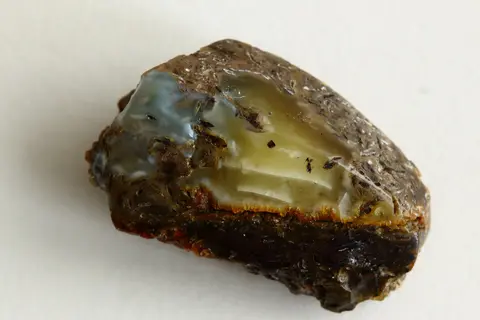
Blue amber is amber, chiefly from the Dominican Republic, that looks blue against a dark background and fluoresces strongly blue under UV light.
A variety of amber. Prices checked .
Not enough data. We have not yet seen 5 or more current dealer listings for blue amber in any one form, so we show no range rather than guess.
| Listing | Size | Locality | Asking | Seen |
|---|---|---|---|---|
| Tumbled Indonesian Blue Amber (3/4" Size) - Fluorescent FossilEra | 10.2 cm | $7 | ||
| Tumbled Indonesian Blue Amber (1" Size) - Fluorescent FossilEra | 2.5 cm | $9 | ||
| Tumbled Indonesian Blue Amber (1 1/4" Size) - Fluorescent FossilEra | 10.2 cm | $15 | ||
| 9" Tall Free-Standing Polished Indonesian Blue Amber FossilEra | 22.9 cm | $595 |
These are dealer asking prices: what shops list blue amber for, not what it sells for and not an appraisal. Selling to a dealer usually brings well below retail, because the dealer has to resell it at a margin.
Its body color is yellow to brown in transmitted light; the blue comes from fluorescing aromatic hydrocarbons in the resin, which is much rarer than ordinary amber. See amber value for the species as a whole.
Baltic amber fluoresces a weaker chalky blue-white, not the intense sky blue of Dominican material.
Occasional
Occasional
These are the tests for amber in general; they apply to blue amber too.
Stir salt into a glass of warm water until no more dissolves, let it cool, then drop the piece in (remove metal fittings first).
Put one drop of acetone or nail polish remover on a hidden spot, wait about 20 seconds, then touch it.
Can leave a small mark.
In a dark room, shine a 365 nm UV torch on the piece.
Rub the piece briskly on wool or a cotton shirt for 30 seconds and hold it over tiny bits of tissue paper.
Heat a needle tip and touch it to a hidden spot, holding the piece away from your face in a ventilated room.
Damages the stone: test only an inconspicuous spot or a piece you do not mind marking.
A stone that passes these tests is consistent with natural blue amber, not proven. For valuable pieces, a gem lab report settles treatment and origin.
Prices: 4 current listings from FossilEra, seen 2026-11-20 to 2026-11-20. How we collect prices.