
Lander Blue turquoise
Fine Hubei spiderweb can look much like Lander; only provenance separates them.
- Same mineral
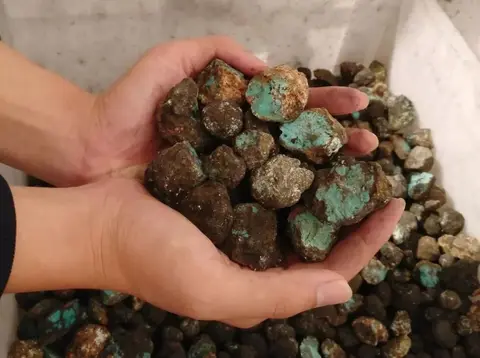
Turquoise from Hubei province, China, the largest source in today's market, ranging from pale chalky stone to hard, deep blue with fine spiderweb matrix.
A variety of turquoise. Prices checked .
Not enough data. We have not yet seen 5 or more current dealer listings for hubei turquoise in any one form, so we show no range rather than guess.
These are dealer asking prices: what shops list hubei turquoise for, not what it sells for and not an appraisal. Selling to a dealer usually brings well below retail, because the dealer has to resell it at a margin.
Hubei supplies most of the world's turquoise and its best grades rival famous American mines; its matrix is often golden brown to black and much of the lower grade is stabilized or dyed. See turquoise value for the species as a whole.
Fine Hubei spiderweb can look much like Lander; only provenance separates them.
White core and dye in cracks.
Also mistaken for hubei turquoise: sleeping beauty turquoise, kingman turquoise, tibetan turquoise, turquoise mountain.
Very common
Common
Swab a drill hole or back.
Can leave a small mark.
Light scratch on the back.
Can leave a small mark.
A stone that passes these tests is consistent with natural hubei turquoise, not proven. For valuable pieces, a gem lab report settles treatment and origin.
Prices: no current dealer listings yet. How we collect prices.