RockValues

Rutile value and identification

Rutile is titanium dioxide (TiO2), the most common of three titanium oxide minerals with anatase and brookite, and a major titanium ore. Collectors know it as striated red to black prisms, twinned elbows and the golden needles inside rutilated quartz.

Prices checked . Page updated .
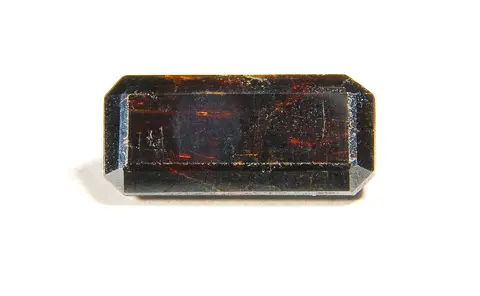
Rutile: Rutile taillé
Rutile taillé. Photo: Didier Descouens, CC BY 3.0, via Wikimedia Commons.
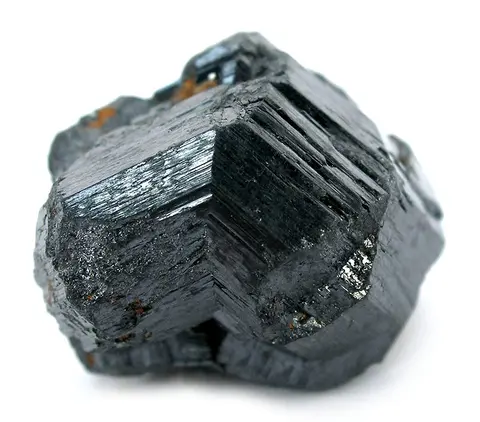
Rutile: Rutile-155004
Rutile-155004. Photo: Robert M. Lavinsky, CC BY-SA 3.0, via Wikimedia Commons.
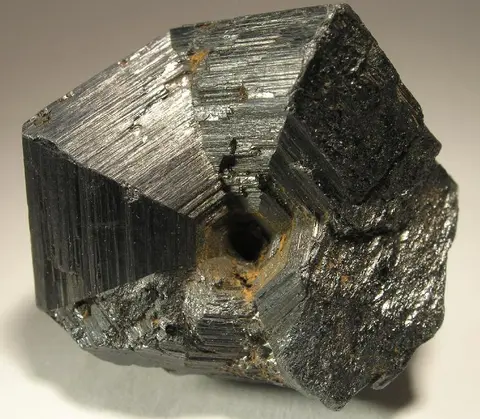
Rutile: Rutile-bem-33b
Rutile-bem-33b. Photo: Robert M. Lavinsky, CC BY-SA 3.0, via Wikimedia Commons.
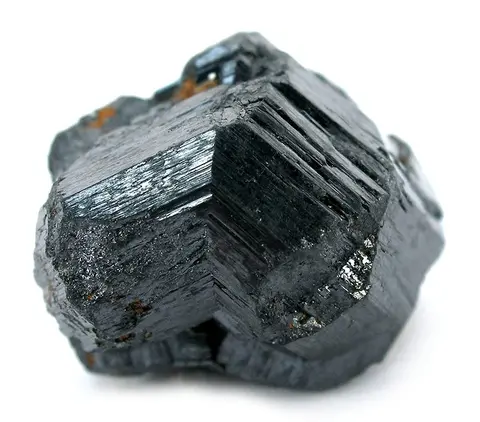
Rutile: Rutile-39486
Rutile-39486. Photo: Robert M. Lavinsky, CC BY-SA 3.0, via Wikimedia Commons.

What rutile is worth

Not enough data. We have not yet seen 5 or more current dealer listings for rutile in any one form, so we show no range rather than guess.

Show 4 of the listings behind these numbers
Sample dealer listings for Rutile
ListingSizeLocalityAskingSeen
Rutile #66153
Dakota Matrix Minerals
2.8 cmGraves Mountain, Lincoln Co., Georgia, United States$25
Rutile #SW67381
Dakota Matrix Minerals
5 cmGraves Mountain, Lincoln Co., Georgia, United States$50
Rutile on Hematite #63323
Dakota Matrix Minerals
3 cmNovo Horizonte, Larvik, Vestfold, Norway$95
Rutile in Quartz cabochon
iRocks (The Arkenstone)
6.8 cmNovo Horizonte, Bahia, Brazil$4,200

These are dealer asking prices: what shops list rutile for, not what it sells for and not an appraisal. Selling to a dealer usually brings well below retail, because the dealer has to resell it at a margin.

How to identify rutile

  • Lengthwise striated prisms, often twinned into knee-shaped elbows or six-armed wheels (sixlings)
  • Adamantine to submetallic luster, very bright on clean faces
  • Reddish brown, blood red in thin splinters, golden in fine needles, black in thick crystals
  • Pale brown streak on unglazed porcelain
  • Heavy for a non-metal (SG about 4.2)
  • Golden or red hair-like needles inside quartz are rutile
  • Hardness 6 to 6.5

Rutile varieties

Star rutile

Star rutile is golden rutile that has grown in oriented needles on a hematite crystal, forming a six-rayed star. It is defined by its oriented growth on hematite, which gives a symmetrical star pattern instead of loose prisms or needles in quartz.

Where rutile comes from

Graves Mountain, Lincoln County, Georgia, USA
Classic large, lustrous rutile crystals and twins in quartzite with lazulite and pyrophyllite.
Bahia and Minas Gerais, Brazil
Source of golden rutile needles in quartz and of rutile stars grown on hematite at Novo Horizonte, Bahia.
Swiss and Austrian Alps
Fine rutile needles and sagenite nets on hematite and quartz in Alpine clefts.
Magnet Cove, Arkansas, USA
Black rutile crystals and twins.
Heavy mineral sands, Australia and Sierra Leone
Industrial rutile mined from beach and alluvial sands for titanium.

Rutile lookalikes

Cassiterite

Cassiterite is much heavier (SG about 6.9) and has a near white streak.

  • Hardness 6 to 7
  • Crystals are stubby bipyramids rather than long striated prisms

Hematite

Hematite leaves a cherry red streak; rutile leaves a pale brown streak.

  • Hematite SG about 5.2
  • Hematite forms plates and rosettes

Brookite

Brookite forms thin brown plates, often with a dark hourglass zone, not striated prisms.

  • Same chemistry, orthorhombic
  • SG about 4.1

Anatase

Anatase forms sharp steep pyramids, often blue-black to brown.

  • Same chemistry, tetragonal
  • SG about 3.9

Black tourmaline

Tourmaline has vitreous luster, a triangular cross section and white streak, and is much lighter.

  • SG about 3.1
  • Hardness 7 to 7.5

Fake, dyed and treated rutile

  • Synthetic rutile (titania)

    Rare

    • Transparent faceted stones with extreme fire and a yellowish tint
    • Very strong doubling of facet edges
    • Made as a diamond simulant from 1948 but rarely seen today
  • Other needle inclusions sold as rutilated quartz

    Occasional

    • Black needles are usually tourmaline, green needles actinolite
    • Rutile needles are golden, red or silvery and very fine

Is my rutile real? Tests you can do at home

  1. Streak test

    Rub an unpolished corner across the back of an unglazed porcelain tile.

    Real
    Pale brown to light yellowish brown streak.
    Fake or lookalike
    Hematite gives red-brown, tourmaline and cassiterite white or near white.

    Can leave a small mark.

  2. Weight in hand and specific gravity

    Weigh dry and suspended in water on a 0.01 g scale; divide dry weight by the loss.

    Real
    About 4.2 to 4.3 for typical rutile.
    Fake or lookalike
    Tourmaline about 3.1, cassiterite about 6.9.
  3. Magnet test

    Hold a strong neodymium magnet against the crystal.

    Real
    Rutile is not attracted, or only weakly if iron rich.
    Fake or lookalike
    Magnetite and some ilmenite pull clearly.
  4. Loupe inspection of habit

    Examine crystal faces and twins with a 10x loupe.

    Real
    Deep lengthwise striations, elbow or sixling twins, adamantine shine.
    Fake or lookalike
    Tourmaline shows rounded triangular sections; hematite shows plates.

A stone that passes these tests is consistent with natural rutile, not proven. For valuable pieces, a gem lab report settles treatment and origin.

Treatments

Cleaning with acid (common)
Specimens are often cleaned of iron stains with oxalic acid; accepted practice with little effect on value. Not usually detectable.
Oiling of matrix specimens (occasional)
Oil brightens luster; lowers value if not disclosed. Greasy feel, dust sticking to faces.

What moves the price of rutile

  1. Habit. Sharp twins, sixlings and stars on hematite rank above single prisms and massive rutile.
  2. Luster. Bright adamantine faces rank above dull or etched crystals.
  3. Size. Large undamaged crystals are scarce.
  4. Locality. Graves Mountain and Novo Horizonte pieces carry collector premiums.
  5. Matrix. Contrasting matrix such as quartz, lazulite or hematite adds value.
  6. Damage. Broken prism ends and chipped twins lower value.

Sources

Prices: 4 current listings from Dakota Matrix Minerals, iRocks (The Arkenstone), seen 2026-11-20 to 2026-11-20. How we collect prices.