RockValues

Anatase value and identification

Dealers list anatase specimens at $39 to $45.

Prices checked . Page updated .
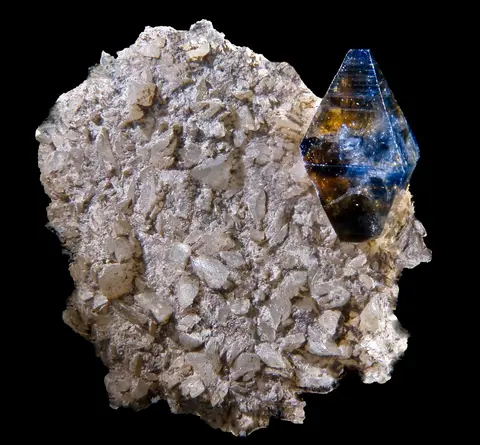
Anatase: Anatase Oisans
Anatase Oisans. Photo: Didier Descouens, CC BY-SA 4.0, via Wikimedia Commons.
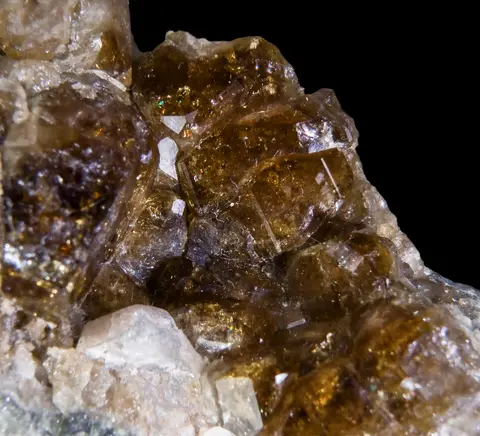
Anatase: Anatase St Gothard
Anatase St Gothard. Photo: Didier Descouens, CC BY-SA 4.0, via Wikimedia Commons.
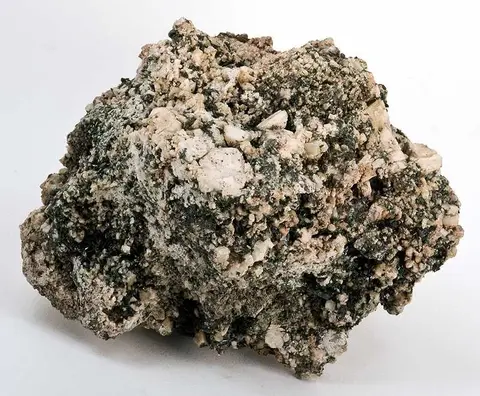
Anatase: Anatase-199957
Anatase-199957. Photo: Robert M. Lavinsky, CC BY-SA 3.0, via Wikimedia Commons.

What anatase is worth

Dealer asking prices for anatase, middle half of current listings, checked 2026-11-20. Bar shows the 25th to 75th percentile; the dark tick is the median.
Form and sizeTypical asking priceRange chartMedianListings
Specimens (per piece)$39 to $45$395 from 2 dealers
Cut stones (per carat)Not enough data (1 listing, need 5)
Show 6 of the listings behind these numbers
Sample dealer listings for Anatase
ListingSizeLocalityAskingSeen
Anatase #65823
Dakota Matrix Minerals
5 cmLe Plan du Lac, Bourg d'Oisans, Isere, France$20
.38" Lustrous Anatase Crystal - Brazil
FossilEra
Brazil$39
.39" Lustrous Anatase Crystal - Brazil
FossilEra
Brazil$39
.42" Lustrous Anatase Crystal - Brazil
FossilEra
Brazil$45
3.6" Anatase Crystals on Quartz with Chlorite Inclusions/Phantoms
FossilEra
9.1 cm$495
Anatase (0.99 ct)
iRocks (The Arkenstone)
0.99 ctZagi Mtn., Hameed Abad Kafoor Dheri, Peshawar Dist., Khyber Pakhtunkhwa Prov., Pakistan$950

These are dealer asking prices: what shops list anatase for, not what it sells for and not an appraisal. Selling to a dealer usually brings well below retail, because the dealer has to resell it at a margin.

How to identify anatase

Anatase is titanium dioxide, the same chemistry as rutile and brookite but with its own tetragonal structure. It forms sharp, steep double pyramids with a bright adamantine luster, mostly in alpine-type veins.

  • Sharp, steep double pyramids (like two long four-sided pyramids base to base)
  • Very bright adamantine to metallic luster
  • Brown, black, blue-black, honey yellow or indigo color
  • Usually small crystals, from a few millimeters to about 2 or 3 centimeters
  • Often perched on quartz, feldspar or chlorite in vein pockets
  • Faces can show fine horizontal striations

Where anatase comes from

Hardangervidda, Norway
Sharp, lustrous dark crystals on quartz from alpine-type veins; a classic modern source.
Swiss, French and Italian Alps
Historic alpine cleft localities with fine bipyramids, including the Binn valley and Graubunden in Switzerland.
Kharan, Balochistan, Pakistan
Larger black to brown crystals, often on quartz.
Minas Gerais, Brazil
Crystals and inclusions in quartz, plus detrital anatase in diamond gravels.

Anatase lookalikes

Brookite

Brookite forms thin, flat plates, often with an hourglass color pattern, not steep pyramids.

  • Same chemistry (TiO2)
  • Orthorhombic
  • Often found with anatase in the same alpine clefts

Rutile

Rutile forms striated prisms and needles, often twinned in elbow shapes, not double pyramids.

  • Rutile SG 4.2 to 4.3, heavier
  • Rutile streak pale brown

Cassiterite

Cassiterite is much heavier (SG about 7) and harder (6 to 7).

  • Often twinned
  • Found in tin districts, not usually alpine clefts

Zircon

Zircon crystals are prisms capped by pyramids rather than pure steep bipyramids, and zircon is harder (7.5).

  • Zircon SG 4.6 to 4.7
  • Zircon luster adamantine but less metallic

Fake, dyed and treated anatase

  • Loose crystals glued onto matrix

    Occasional

    • Glue visible at the crystal base under a loupe
    • Crystal sits at an unnatural angle or on a broken surface
    • No matching growth contact with the host
  • Rutile, brookite or other dark crystals labeled anatase

    Occasional

    • Crystal shape is not a steep bipyramid

Is my anatase real? Tests you can do at home

  1. Loupe on crystal shape

    Examine the crystal with a 10x loupe from several angles.

    Real
    Steep four-sided double pyramid with bright faces.
    Fake or lookalike
    Prisms, plates or elbow twins point to rutile, brookite or other species.
  2. Streak plate

    Gently rub a broken fragment, not a show crystal, on unglazed porcelain.

    Real
    White to pale yellow streak.
    Fake or lookalike
    Black metallic minerals such as hematite give dark streaks.

    Damages the stone: test only an inconspicuous spot or a piece you do not mind marking.

  3. Glue check at the contact

    Look at where the crystal meets the matrix under strong light and a loupe.

    Real
    Crystal grows from the matrix with no film or gap.
    Fake or lookalike
    Shiny glue film, bubbles or a gap filled with dust.

A stone that passes these tests is consistent with natural anatase, not proven. For valuable pieces, a gem lab report settles treatment and origin.

What moves the price of anatase

  1. Crystal size. Most crystals are small; sharp crystals over a centimeter are much more desirable.
  2. Sharpness and luster. Undamaged tips and mirror-bright faces drive specimen value.
  3. Matrix. Crystals on contrasting quartz or feldspar matrix beat loose crystals.
  4. Locality. Classic Alpine and Norwegian localities carry a premium among collectors.
  5. Damage and repair. Chipped tips and reattached crystals reduce value.

Sources

Prices: 6 current listings from Dakota Matrix Minerals, FossilEra, iRocks (The Arkenstone), seen 2026-11-20 to 2026-11-20. How we collect prices.