What phenakite is worth
Not enough data. We have not yet seen 5 or more current dealer listings for phenakite in any one form, so we show no range rather than guess.
These are dealer asking prices: what shops list phenakite for, not what it sells for and not an appraisal. Selling to a dealer usually brings well below retail, because the dealer has to resell it at a margin.
How to identify phenakite
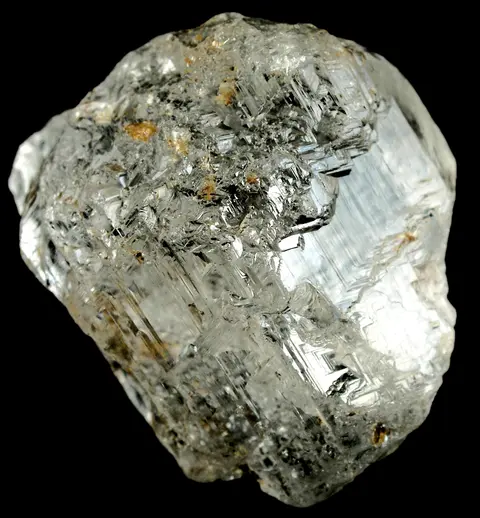
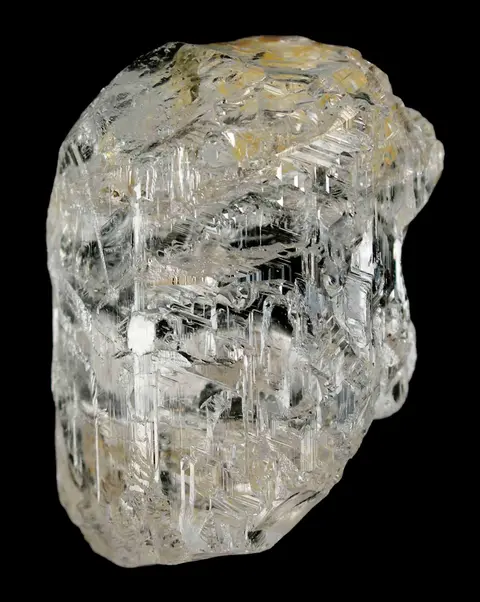
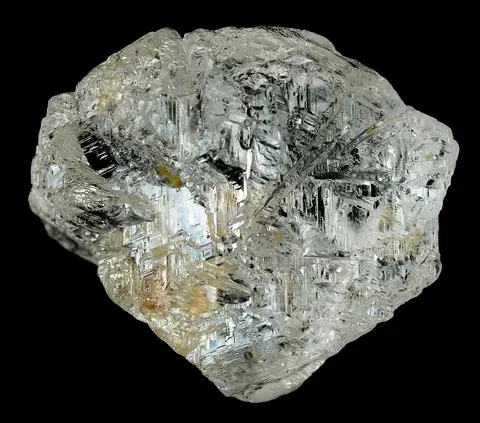
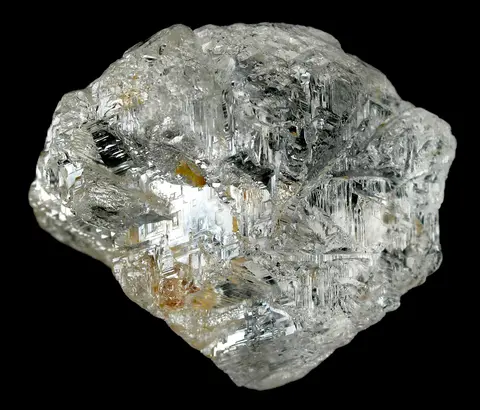
- Colorless to white, sometimes pale yellow or pink, glassy crystals.
- Hardness 7.5 to 8: scratches quartz.
- Short rhombohedral or lens-shaped crystals, or slender prisms; penetration twins are common in Brazilian material.
- Heavier than quartz (SG about 2.96 vs 2.65).
- No good cleavage; conchoidal fracture.
- Found with beryl, topaz, quartz and feldspar in pegmatites or with emerald in schist.
Where phenakite comes from
- Ural Mountains, Russia
- Large crystals from the emerald mines near Yekaterinburg.
- Minas Gerais, Brazil
- Gem crystals and twins; source of most faceting rough.
- Madagascar, Nigeria and Namibia
- Pegmatite crystals.
- Mount Antero, Colorado, USA
- Small sharp crystals with aquamarine and topaz.
- Sri Lanka and Myanmar
- Gem gravels yielding facet grade pieces.
Phenakite lookalikes
Quartz is lighter (SG 2.65), slightly softer and forms long six-sided prisms with striations across the faces.
- RI 1.544 to 1.553
- Hardness 7
Herkimer diamonds are doubly terminated quartz from New York with six prism faces; phenakite is heavier and usually lens-shaped or rhombohedral.
- SG 2.65 vs 2.96
- Often contain black anthraxolite inclusions
Topaz has a perfect basal cleavage and is heavier (SG 3.5).
- Hardness 8
- RI 1.61 to 1.64
Danburite forms wedge-tipped prisms like topaz and has lower RI.
Also mistaken for phenakite: hambergite.
Fake, dyed and treated phenakite
Quartz crystals sold as phenakite
Common
- Six-sided prism with horizontal striations
- SG 2.65 on a kitchen scale test
- Unusually low cost for size
Glass sold as faceted phenakite
Rare
- Bubbles
- Scratched by quartz
Is my phenakite real? Tests you can do at home
-
Specific gravity by water displacement
Weigh dry and suspended in water on a scale reading to 0.01 g; works best on pieces over 5 g.
- Real
- About 2.95 to 3.0.
- Fake or lookalike
- Quartz reads 2.65.
-
Crystal form check
Look at the crystal shape with a loupe.
- Real
- Rhombohedral or lens-shaped crystals, short prisms, or twins.
- Fake or lookalike
- Quartz shows a six-sided prism with horizontal striations and pyramid tips.
-
Scratch quartz
Press a sharp phenakite point against a quartz crystal face you do not care about.
- Real
- Phenakite scratches quartz.
- Fake or lookalike
- Quartz does not scratch quartz easily.
Can leave a small mark.
A stone that passes these tests is consistent with natural phenakite, not proven. For valuable pieces, a gem lab report settles treatment and origin.
Treatments
- None (almost always)
- Phenakite is sold untreated. Not applicable.
What moves the price of phenakite
- Crystal quality. Transparent, sharp, undamaged crystals and twins.
- Size. Large clean crystals are rare.
- Locality. Russian and Brazilian classics sell for more.
- Faceted clarity. Cut stones are a collector item; clean stones with good brilliance.
- Metaphysical demand. Much small phenakite is sold to crystal buyers, which supports prices for even small pieces.
Questions collectors ask about phenakite
- Herkimer diamond vs phenakite: how do you tell them apart?
- Herkimer diamonds are double-terminated quartz with six-sided prisms and SG 2.65. Phenakite is harder, heavier (about 2.96) and usually forms lens-shaped or rhombohedral crystals.