RockValues

Enstatite value and identification

Enstatite is the magnesium-rich orthopyroxene, a magnesium silicate common in mantle rocks, gabbros and meteorites. Clear green to brown crystals are cut as collector gems, and iron-bearing forms with a metallic sheen are sold as bronzite.

Prices checked . Page updated .
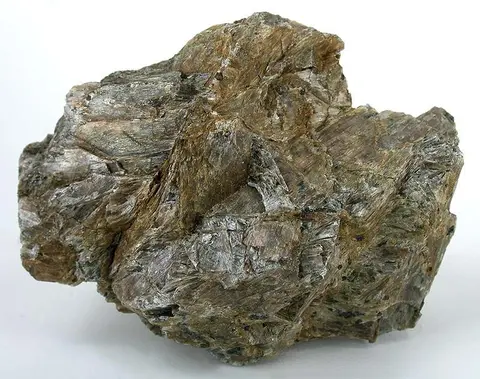
Enstatite: Hypersthene - Enstatite-Ferrosilite-serial
Hypersthene - Enstatite-Ferrosilite-serial. Photo: Ra'ike (see also: de:Benutzer:Ra'ike ), CC BY-SA 3.0, via Wikimedia Commons.
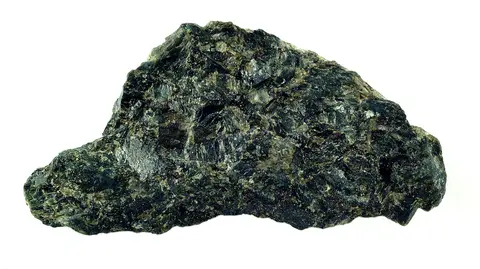
Enstatite: Enstatite-202036
Enstatite-202036. Photo: Robert M. Lavinsky, CC BY-SA 3.0, via Wikimedia Commons.
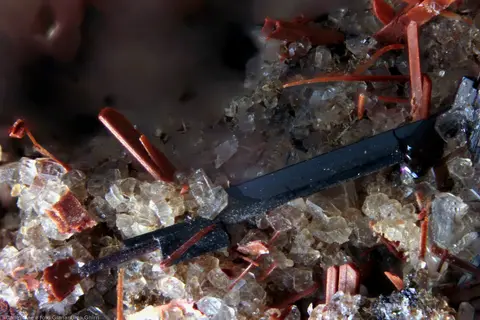
Enstatite: Pseudobrookite, Enstatite, Sanidine-1057200
Pseudobrookite, Enstatite, Sanidine-1057200. Photo: Gianandrea Ghirri, CC BY 3.0, via Wikimedia Commons.
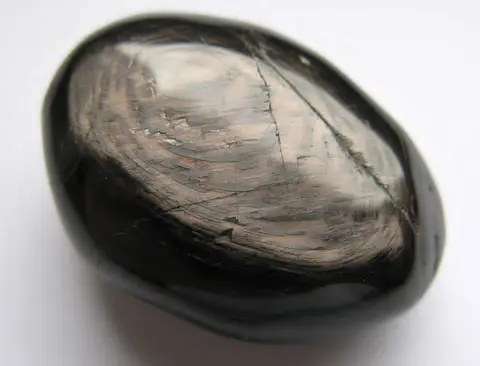
Enstatite: Enstatite (GeoDIL number - 1623)
Enstatite (GeoDIL number - 1623). Photo: Shannon Heinle, CC0, via Wikimedia Commons.

What enstatite is worth

Not enough data. We have not yet seen 5 or more current dealer listings for enstatite in any one form, so we show no range rather than guess.

Show 12 of the listings behind these numbers
Sample dealer listings for Enstatite
ListingSizeLocalityAskingSeen
1.8" Shimmering Bronzite Pendant (Necklace)
FossilEra
4.6 cm$35
1.7" Shimmering Bronzite Pendant (Necklace)
FossilEra
4.3 cm$35
1.45" Shimmering Bronzite (Enstatite) Specimen - Austria
FossilEra
3.7 cmAustria$39
0.25" Aubrite Meteorite Fragment - Peña Blanca Springs
FossilEra
0.6 cm$45
1.6" Gleaming Bronzite (Enstatite) Specimen - Austria
FossilEra
4.1 cmAustria$45
1.2" Raw Bronzite (Enstatite) Specimen - Austria
FossilEra
3.1 cmAustria$45
1.25" Raw Bronzite (Enstatite) Specimen - Austria
FossilEra
3.2 cmAustria$45
1.5" Raw Bronzite (Enstatite) Specimen - Austria
FossilEra
3.8 cmAustria$45
1.4" Raw Bronzite (Enstatite) Specimen - Austria
FossilEra
3.6 cmAustria$45
.4" Aubrite Meteorite Fragment - Sebkha el Melah 001
FossilEra
$49
0.19" Aubrite Meteorite Fragment - Peña Blanca Springs
FossilEra
0.5 cm$49
.41" Aubrite Meteorite Fragment - Sebkha el Melah 001
FossilEra
$55

These are dealer asking prices: what shops list enstatite for, not what it sells for and not an appraisal. Selling to a dealer usually brings well below retail, because the dealer has to resell it at a margin.

How to identify enstatite

  • Green, brown, olive, gray or nearly colorless; gem material is most often a yellowish to brownish green.
  • Two cleavages meeting at close to 90 degrees, visible as stepped breaks on rough pieces.
  • Hardness 5 to 6: about equal to glass, softer than quartz.
  • Specific gravity about 3.2 to 3.3, a little heavier than quartz in the hand.
  • Pleochroism in gem stones shifts between green and brownish or yellowish tones.
  • Iron-richer pieces may show a bronze, fibrous sheen (bronzite).

Where enstatite comes from

Sri Lanka
Gem gravels yield green to brown enstatite for faceting.
Myanmar
Mogok area produces gem enstatite alongside other collector gems.
Tanzania and Kenya
East African sources of green gem rough.
Bamble, Norway
Classic locality for large enstatite crystals in metamorphic rock.

Enstatite lookalikes

Chrome diopside

Chrome diopside is a much brighter, grass to emerald green; enstatite greens are yellowish or brownish.

  • Diopside RI about 1.67 to 1.70, slightly higher
  • Diopside SG about 3.3
  • Both are pyroxenes with similar hardness

Andalusite

Andalusite shows very strong green to reddish brown pleochroism that is visible face up.

  • Andalusite hardness 6.5 to 7.5
  • Andalusite SG about 3.15

Peridot

Peridot has strong doubling of back facets under a loupe and a more even yellowish green.

  • Peridot RI about 1.65 to 1.69, birefringence much higher
  • Peridot SG about 3.3
  • Peridot shows lily pad inclusions

Bronzite

Bronzite is iron-bearing enstatite with a fibrous bronze sheen and is opaque.

  • Same mineral family
  • Sold polished as tumbled stones and cabochons

Hypersthene

Hypersthene is a darker, more iron-rich orthopyroxene, usually dark brown to black with a coppery sheen.

  • Higher SG than enstatite
  • Trade name for intermediate members of the series

Also mistaken for enstatite: kornerupine.

Fake, dyed and treated enstatite

  • Other green pyroxenes or tourmaline labeled as enstatite

    Occasional

    • Small collector stones are often identified only by eye
    • RI and SG must match to confirm
  • Green or brown glass

    Rare

    • Bubbles and swirl marks
    • No pleochroism

Is my enstatite real? Tests you can do at home

  1. Scratch test against glass

    Try to scratch a glass tile or bottle with a sharp edge of rough material (not a faceted stone).

    Real
    Leaves at most a faint scratch; hardness is close to glass.
    Fake or lookalike
    Quartz and tourmaline scratch glass easily.

    Can leave a small mark.

  2. Cleavage check on rough

    Look at broken surfaces with a loupe.

    Real
    Flat stepped cleavage faces meeting at nearly right angles.
    Fake or lookalike
    Glass and quartz break with smooth curved conchoidal surfaces.
  3. Pleochroism check

    Rotate a faceted stone under white light.

    Real
    Moderate shift between green and brownish tones.
    Fake or lookalike
    Glass shows no change.

A stone that passes these tests is consistent with natural enstatite, not proven. For valuable pieces, a gem lab report settles treatment and origin.

Treatments

None known as routine (rare)
Enstatite is sold untreated, so treatment does not normally affect value. Not usually needed.

What moves the price of enstatite

  1. Transparency. Facet-grade clear material is far more valuable than opaque massive enstatite.
  2. Color. Clean green tones are preferred over brownish or grayish stones.
  3. Size and clarity. Clean faceted stones over a few carats are scarce.
  4. Phenomena. Cat's eye and star stones are sold as separate collector items.
  5. Specimen form. Well-formed crystals from classic localities sell to mineral collectors.

Sources

Prices: 16 current listings from FossilEra, seen 2026-11-20 to 2026-11-20. How we collect prices.