RockValues

Wolframite value and identification

Wolframite is the name for iron manganese tungstate, (Fe,Mn)WO4, a series between iron-rich ferberite and manganese-rich hubnerite. It is a main ore of tungsten and forms heavy, dark, bladed crystals.

Prices checked . Page updated .

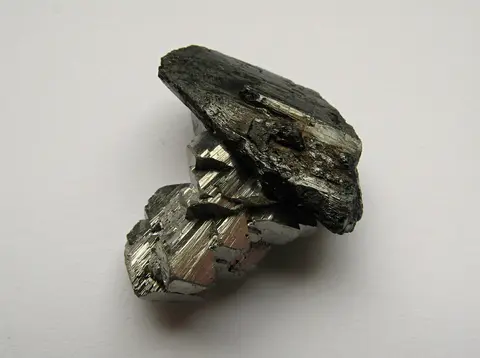
Wolframite: Arsenopyrite, Wolframite2
Arsenopyrite, Wolframite2. Photo: Ra'ike, CC BY-SA 3.0, via Wikimedia Commons.
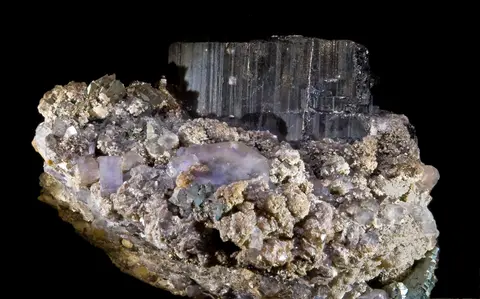
Wolframite: Wolframiteportugal1
Wolframiteportugal1. Photo: Didier Descouens, CC BY-SA 4.0, via Wikimedia Commons.
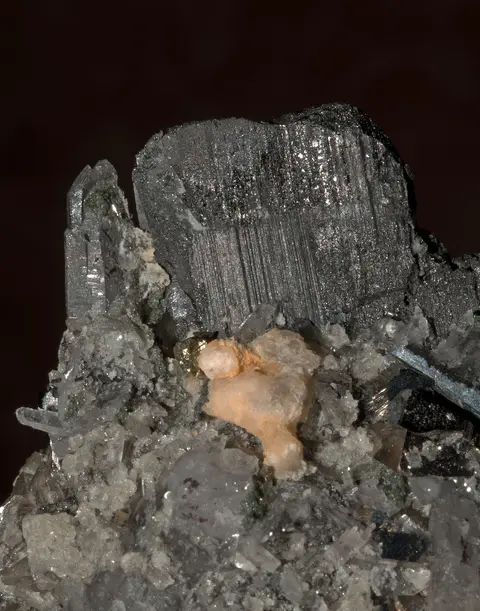
Wolframite: Wolframite, quartz, calcite
Wolframite, quartz, calcite. Photo: Parent Géry, CC BY-SA 3.0, via Wikimedia Commons.
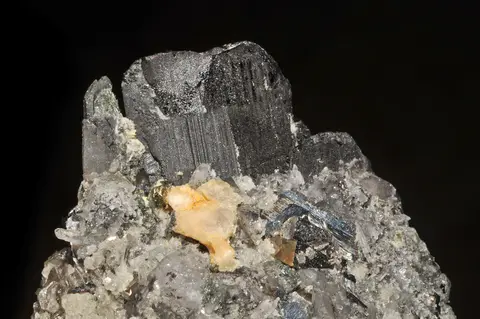
Wolframite: Wolframite, arsénopyrite, quartz, calcite
Wolframite, arsénopyrite, quartz, calcite. Photo: Parent Géry, CC BY-SA 3.0, via Wikimedia Commons.

What wolframite is worth

Not enough data. We have not yet seen 5 or more current dealer listings for wolframite in any one form, so we show no range rather than guess.

These are dealer asking prices: what shops list wolframite for, not what it sells for and not an appraisal. Selling to a dealer usually brings well below retail, because the dealer has to resell it at a margin.

How to identify wolframite

  • Black to dark brown, flat tabular or bladed crystals, often striated lengthwise
  • Very heavy for its size (SG 7 to 7.5), the most useful field clue
  • Submetallic to adamantine luster on fresh faces
  • One perfect cleavage giving bright flat flashes
  • Reddish-brown to brownish-black streak
  • Often in quartz veins with cassiterite, arsenopyrite, apatite, fluorite or muscovite

Where wolframite comes from

Panasqueira, Portugal
Long-running tungsten mine with large sharp crystals, often with apatite, arsenopyrite and siderite.
Yaogangxian, Hunan, China
Large lustrous black blades on quartz, many of the best modern specimens.
Pasto Bueno, Ancash, Peru
Red to brown hubnerite blades with quartz and fluorite.
Cornwall, England
Historic tin and tungsten veins.
Bolivia
Tin-tungsten veins with ferberite and hubnerite.

Wolframite lookalikes

Cassiterite

Cassiterite is much harder (6 to 7) and has no good cleavage.

  • Cassiterite SG about 7, similar heft
  • Pale streak vs dark brown
  • Often occurs with wolframite

Columbite and tantalite

Columbite-tantalite has a dark streak but poorer cleavage and usually grows in pegmatites, not quartz veins.

  • Hardness about 6
  • SG ranges about 5.2 to 8
  • Needs lab work to separate confidently

Black tourmaline (schorl)

Schorl is far lighter in the hand and has no cleavage.

  • SG about 3.1 to 3.2
  • Hardness 7
  • Triangular cross section

Dark sphalerite

Sphalerite has six cleavage directions and is about half the weight.

  • SG about 4
  • Resinous luster
  • Pale yellow-brown streak

Fake, dyed and treated wolframite

  • Repaired or glued crystals on quartz

    Occasional

    • Glue lines at the base
    • Crystal angle does not fit the matrix
  • Black tourmaline or other dark crystals labeled wolframite

    Occasional

    • Feels light
    • No cleavage flashes
    • Pale streak

Is my wolframite real? Tests you can do at home

  1. Heft test

    Hold the specimen and compare with a similar-sized quartz or tourmaline piece.

    Real
    Unusually heavy (SG 7 to 7.5).
    Fake or lookalike
    Tourmaline and most dark lookalikes feel light.
  2. Streak plate

    Rub a small edge on unglazed porcelain.

    Real
    Reddish-brown to brownish-black streak.
    Fake or lookalike
    Cassiterite and tourmaline give a pale streak.

    Can leave a small mark.

  3. Specific gravity with a kitchen scale

    Weigh the piece dry, then suspended in water; divide dry weight by the loss in weight.

    Real
    About 7.0 to 7.5.
    Fake or lookalike
    Schorl about 3.2, sphalerite about 4.
  4. Steel knife scratch

    Try a steel knife on a hidden spot.

    Real
    A knife scratches it (hardness 4 to 4.5).
    Fake or lookalike
    Cassiterite and tourmaline resist a knife.

    Can leave a small mark.

A stone that passes these tests is consistent with natural wolframite, not proven. For valuable pieces, a gem lab report settles treatment and origin.

Treatments

Repair (occasional)
Reattached crystals lower value compared with undamaged pieces. Loupe at contacts.

What moves the price of wolframite

  1. Crystal size and sharpness. Large, lustrous, sharply terminated blades bring the most.
  2. Associations. Combinations with apatite, fluorite, quartz or arsenopyrite add display value.
  3. Locality. Panasqueira and Yaogangxian are top localities; red Pasto Bueno hubnerite is sought after.
  4. Luster. Bright, unaltered faces beat dull, coated crystals.
  5. Damage. The perfect cleavage makes chips common; complete crystals are worth more.

Sources

Prices: no current dealer listings yet. How we collect prices.