


Dark terrestrial rocks and shale
Earth rocks lack a fusion crust and chondrules.
- Shale splits in layers
- Basalt has crystals and gas holes
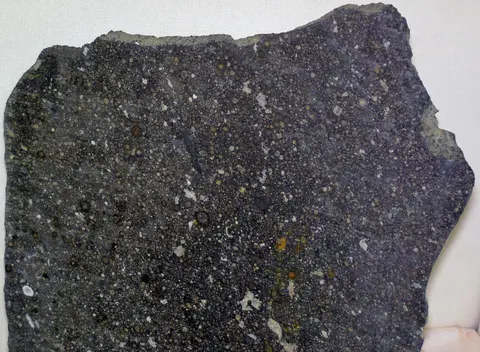
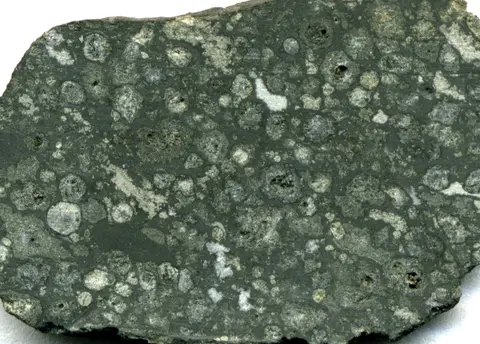
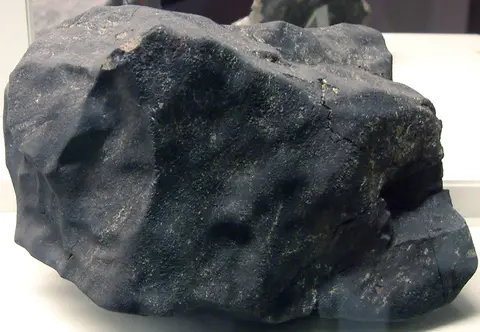
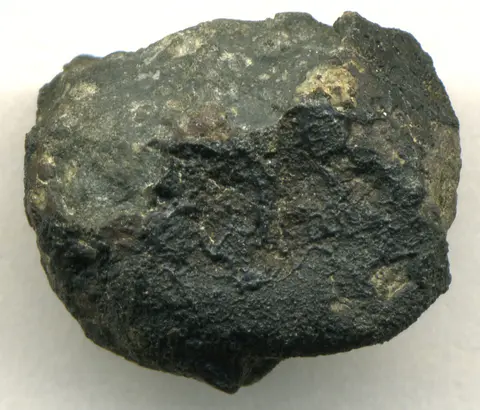
Carbonaceous chondrites are primitive stony meteorites that contain carbon, water-bearing minerals and organic compounds, including amino acids in some.
A variety of meteorite. Prices checked .
Not enough data. We have not yet seen 5 or more current dealer listings for carbonaceous chondrite in any one form, so we show no range rather than guess.
| Listing | Size | Locality | Asking | Seen |
|---|---|---|---|---|
| .13" Carbonaceous Chondrite Hammer Stone - Aguas Zarcas FossilEra | $25 | |||
| .1" Carbonaceous Chondrite Hammer Stone - Aguas Zarcas FossilEra | $25 | |||
| .20" Tarda Meteorite Fragment - 2020 Witnessed Fall! FossilEra | $35 | |||
| .17" Tarda Meteorite Fragment - 2020 Witnessed Fall! FossilEra | $35 | |||
| .11" Carbonaceous Chondrite Fragment - Cold Bokkeveld FossilEra | $49 | |||
| .09" Carbonaceous Chondrite Fragment - Cold Bokkeveld FossilEra | $49 |
These are dealer asking prices: what shops list carbonaceous chondrite for, not what it sells for and not an appraisal. Selling to a dealer usually brings well below retail, because the dealer has to resell it at a margin.
Darker, softer and less metal-rich than ordinary chondrites, and scientifically prized as some of the least altered material from the early solar system. See meteorite value for the species as a whole.
Earth rocks lack a fusion crust and chondrules.
Ordinary chondrites show many metal flecks and attract a magnet strongly.
Common
Examine at 10x.
Look up the name in the Meteoritical Bulletin Database.
A stone that passes these tests is consistent with natural carbonaceous chondrite, not proven. For valuable pieces, a gem lab report settles treatment and origin.
Many carbonaceous chondrites are fragile and absorb water; store dry and handle gently.
Prices: 6 current listings from FossilEra, seen 2026-11-20 to 2026-11-20. How we collect prices.