RockValues

Allende value and identification

Allende is a CV3 carbonaceous chondrite that fell on 8 February 1969 near Pueblito de Allende in Chihuahua, Mexico. More than two tonnes were recovered, making it one of the most studied meteorites.

A variety of meteorite. Prices checked .
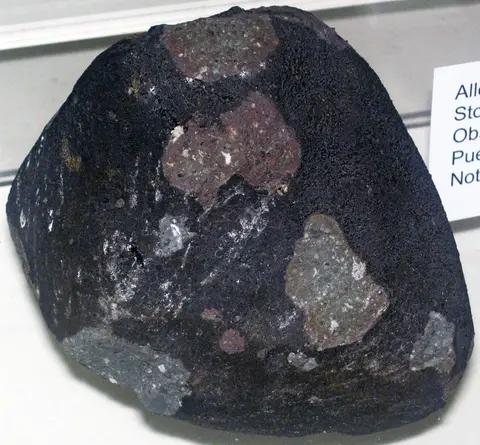
Allende: Carbonaceous chondrite (Allende Meteorite) (4.560-4.568 Ga) 13
Carbonaceous chondrite (Allende Meteorite) (4.560-4.568 Ga) 13. Photo: James St. John, CC BY 2.0, via Wikimedia Commons.

What allende is worth

Not enough data. We have not yet seen 5 or more current dealer listings for allende in any one form, so we show no range rather than guess.

These are dealer asking prices: what shops list allende for, not what it sells for and not an appraisal. Selling to a dealer usually brings well below retail, because the dealer has to resell it at a margin.

How to identify allende

A specific witnessed fall, famous for white calcium-aluminum-rich inclusions (CAIs), among the oldest solids in the solar system, set in a dark gray matrix with chondrules. See meteorite value for the species as a whole.

  • Dark gray to black matrix with white and pinkish irregular inclusions (CAIs) and round chondrules
  • Black fusion crust, often fresh because it was collected right after the fall
  • Little visible metal compared with ordinary chondrites
  • Fairly crumbly compared with ordinary chondrites

Other meteorite varieties

Where allende comes from

Pueblito de Allende, Chihuahua, Mexico
Strewn field of the 1969 fall; locals collected thousands of stones.

Allende lookalikes

Other CV3 chondrites from Northwest Africa

NWA CV3 meteorites look very similar; only provenance separates them.

  • Often more weathered and rusty
  • Usually sold under NWA numbers

Terrestrial dark rocks

Earth rocks lack chondrules and white CAIs.

  • No fusion crust

Fake, dyed and treated allende

  • NWA carbonaceous chondrites sold as Allende

    Occasional

    • Weathered, rusty interior
    • No provenance
    • Desert varnish on crust

Is my allende real? Tests you can do at home

  1. Loupe on a cut or broken face

    Examine with a 10x loupe.

    Real
    White CAIs and round chondrules in a dark matrix.
    Fake or lookalike
    Earth rocks show crystals or grains, not chondrules.
  2. Crust check

    Look at the crust under a loupe.

    Real
    Black fusion crust, often fresh.
    Fake or lookalike
    Brown weathered crust suggests a desert find.

A stone that passes these tests is consistent with natural allende, not proven. For valuable pieces, a gem lab report settles treatment and origin.

What moves the price of allende

  1. Crusted individuals. Complete or mostly crusted stones bring more than fragments.
  2. Visible CAIs. Slices with large, clear CAIs are preferred.
  3. Size. Larger stones are scarcer.
  4. Provenance. Documented Allende origin matters because of NWA lookalikes.

Sources

Prices: no current dealer listings yet. How we collect prices.