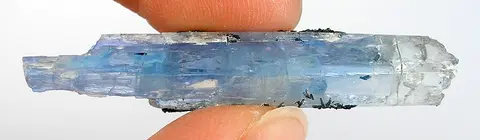
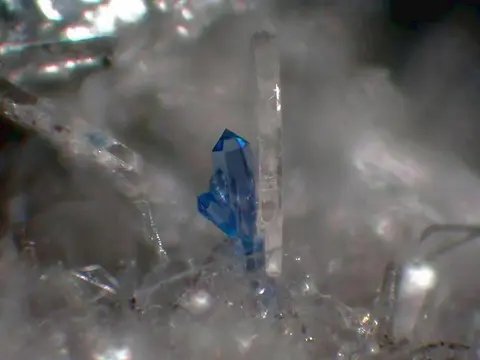
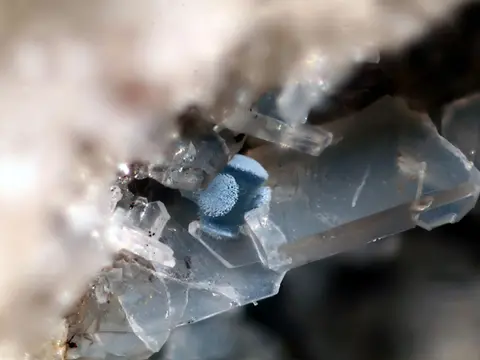
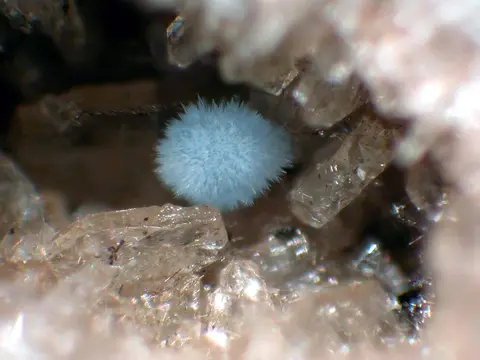
Jeremejevite is a rare aluminum borate with fluorine and hydroxyl, found as hexagonal prisms in granitic pegmatites. It is a collector gem, known mainly for pale to cornflower blue crystals from Namibia.
These are dealer asking prices: what shops list jeremejevite for, not what it sells for and not an appraisal. Selling to a dealer usually brings well below retail, because the dealer has to resell it at a margin.
How to identify jeremejevite
Hexagonal prisms, often tapering toward the end with small pyramid faces
Colorless, pale blue to cornflower blue, or pale yellowish brown
Color often zoned, with blue concentrated near the tips or in sectors
Glassy (vitreous) luster with no cleavage, conchoidal fracture
Hard enough to scratch glass easily
Usually small; clean faceted stones over a few carats are very rare
Where jeremejevite comes from
Mount Soktui, Adun-Chilon Mountains, Siberia, Russia
Type locality, where the species was first described in 1883 from large crystals.
Cape Cross area, Namibia
Gem blue crystals found in 1973 near Mile 72, north of Swakopmund; the classic source for faceted stones.
Erongo Mountains, Namibia
Later source of colorless to pale blue and yellowish crystals from pegmatite pockets.
Sapphire is much heavier (SG about 4.0) and harder (9).
Sapphire RI 1.76 to 1.77
Sapphire crystals are barrel-shaped hexagonal dipyramids
Fake, dyed and treated jeremejevite
Pale aquamarine or treated blue topaz sold as jeremejevite
Occasional
Refractive index and SG do not match
Topaz shows cleavage feathers
Price and story too good for a rare species
Blue glass
Rare
Round gas bubbles or swirl marks under a loupe
Single refraction (no doubling) in a refractometer or polariscope
Warms quickly in the hand
Is my jeremejevite real? Tests you can do at home
Scratch test against glass
On rough crystal only, try a sharp edge against a glass slide in an unseen spot.
Real
Scratches glass easily.
Fake or lookalike
Apatite barely marks glass; glass imitations are equal in hardness and may not scratch.
Can leave a small mark.
Specific gravity with a kitchen scale
Weigh the stone dry, then weigh it suspended in water; divide dry weight by the loss of weight in water. Needs a scale reading to 0.01 g for small stones.
Real
About 3.28 to 3.31.
Fake or lookalike
Aquamarine about 2.7, topaz about 3.5, sapphire about 4.0.
Loupe inspection
Examine with a 10x loupe for inclusions and color zoning.
Real
Natural growth tubes, fluid inclusions and zoned blue color.
Fake or lookalike
Glass shows round bubbles and swirls.
A stone that passes these tests is consistent with natural jeremejevite, not proven. For valuable pieces, a gem lab report settles treatment and origin.
Treatments
None known as routine (rare)
Jeremejevite is sold untreated; any claim of treatment should be checked with a lab. Laboratory testing if in doubt.
What moves the price of jeremejevite
Color. Saturated cornflower blue is the most sought after; colorless and pale stones rank lower.
Size. Clean faceted stones above a couple of carats are very rare, so value climbs steeply with size.
Clarity. Most crystals are included; eye-clean stones command more.
Crystal quality. For specimens, sharp, well-terminated and undamaged prisms, especially on matrix, are preferred.
Locality. Namibian blue material from the original Cape Cross find is a collector reference point.
Identification. A lab report confirming the species supports value because lookalikes are common.
Sources
Prices: 2 current listings from iRocks (The Arkenstone), seen 2026-11-20 to 2026-11-20. How we collect prices.