Obsidian vs onyx
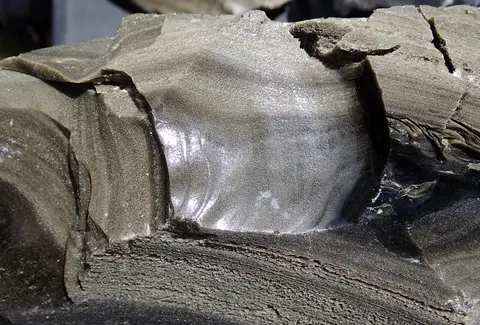
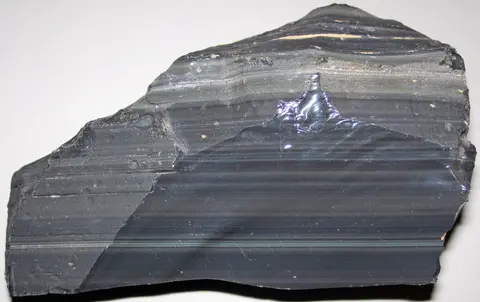
Onyx has a waxy polish and stays opaque on thin edges; obsidian edges glow smoky gray when backlit.
Side by side
| Property | Obsidian | Onyx |
|---|---|---|
| Hardness (Mohs) | 5 to 5.5 | 6.5 to 7 |
| Specific gravity | 2.35 to 2.60 | 2.58 to 2.64 |
| Luster | Vitreous (glassy) | Waxy to vitreous |
| Streak | White | White |
| Crystal system | Amorphous (no crystal structure) | Trigonal (microcrystalline) |
| Cleavage | None | None |
| Refractive index | 1.48 to 1.51 | 1.53 to 1.54 |
| Formula | Amorphous glass, mostly SiO2 with aluminum, sodium, potassium and minor iron | SiO2 |
| Typical dealer asking price | $25 to $99 (spheres) | Not enough data |
How to tell them apart
- Hardness about 7, scratches glass
- Most black onyx on the market is dyed chalcedony
- Fracture is less glassy and more waxy
- Specific gravity about 2.6
Photos of each
Obsidian


Onyx
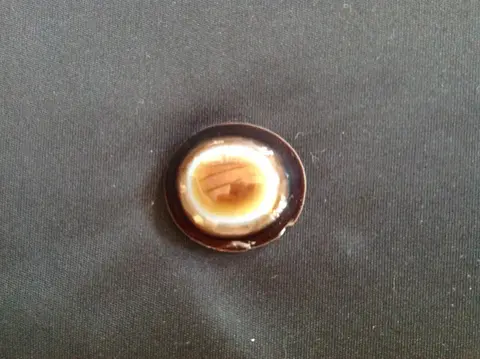

More on each: obsidian value and identification and onyx value and identification.