Concretions vs geodes
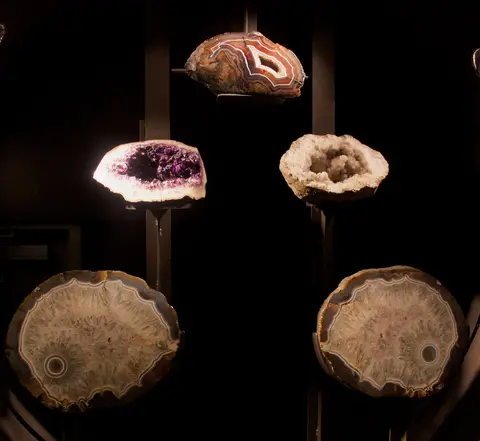
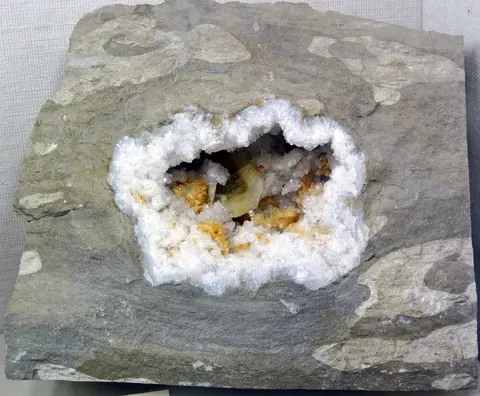
Geodes are hollow and lined with crystals; concretions are solid.
Side by side
| Property | Concretions | Geodes |
|---|---|---|
| Hardness (Mohs) | Varies with cement: about 3 for calcite-cemented, up to about 6 to 7 for silica or iron oxide rinds | About 7 for quartz and chalcedony shells; 3 where calcite lines the cavity |
| Specific gravity | Varies: about 2.3 to 2.7 for calcite or silica cemented sandstone; higher for iron oxide types | |
| Luster | Dull to earthy | Dull outside; glassy to waxy inside |
| Formula | Shell mainly SiO2 (chalcedony and quartz); linings vary | |
| Typical dealer asking price | Not enough data | $151 to $367 (geodes and nodules) |
How to tell them apart
- Geodes feel light for their size
- Geodes often have a cauliflower-textured shell
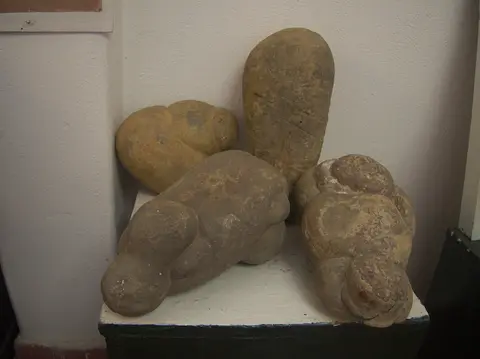
A concretion is solid all the way through, often layered or with a fossil at the center.
- Usually sandstone, siltstone or iron oxide
- Softer than a quartz shell
Photos of each
Concretions

Geodes


More on each: concretions value and identification and geodes value and identification.