RockValues

Aventurine value and identification

Dealers list aventurine rough at $3 to $6 per pound; tumbled stones run about $205 to $335 per pound.

Prices checked . Page updated .
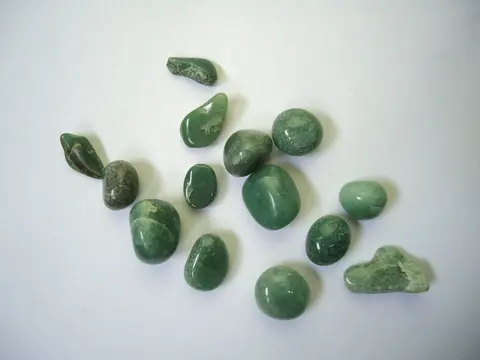
Aventurine: Aventurine pebbles
Aventurine pebbles. Photo: Mauro Cateb, CC BY-SA 3.0, via Wikimedia Commons.
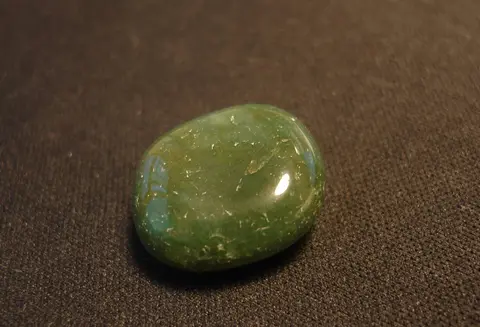
Aventurine: GreenAventurine
GreenAventurine. Photo: Maatpublishing, CC BY-SA 4.0, via Wikimedia Commons.
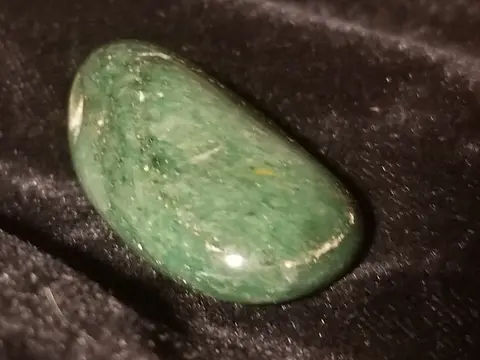
Aventurine: Aventurine 1
Aventurine 1. Photo: Bordercolliez, CC0, via Wikimedia Commons.

What aventurine is worth

Dealer asking prices for aventurine, middle half of current listings, checked 2026-11-20. Bar shows the 25th to 75th percentile; the dark tick is the median.
Form and sizeTypical asking priceRange chartMedianListings
Rough (per pound)$2.91 to $5.88$4.406 from 1 dealer
Tumbled stones (per pound)$204 to $335$2195 from 1 dealer
Spheres (per piece)Not enough data (3 listings, need 5)
Carvings and shapes (per piece)Not enough data (2 listings, need 5)
Specimens (per piece)Not enough data (2 listings, need 5)

By variety

Median dealer asking price by variety (rough).
VarietyMedianListings
Green aventurineNot enough data2
Red aventurineNot enough data2
Show 12 of the listings behind these numbers
Sample dealer listings for Aventurine
ListingSizeLocalityAskingSeen
.9" Polished Green Aventurine Sphere
FossilEra
$3
.9" Polished Red Aventurine Sphere
FossilEra
$3
Large Tumbled Red Aventurine Stones
FossilEra
$3.50
1.8" Polished Red Aventurine Flat Pocket Stone
FossilEra
4.6 cm$4
Large Tumbled Green Aventurine - 1" to 1 1/2" Size
FossilEra
2.5 cm$4
1.5" Peach Aventurine Worry Stones
FossilEra
3.8 cm$4
.9" Polished Yellow Aventurine Sphere
FossilEra
$4
1.7" Polished Red Aventurine Pocket Stone
FossilEra
4.3 cm$6
Red Aventurine, Tumbling Rough, per lb (Tumbling)
The Gem Shop
3.8 cmIndia$6
Yellow Aventurine, Tumbling Rough, per lb (Tumbling)
The Gem Shop
3.8 cmIndia$6
Green Aventurine, Tumbling Rough, per lb (Tumbling)
The Gem Shop
5.1 cm$6
Red AVENTURINE Tumbled Stones - Tumbled Crystals, Self Care, Healing Crystals and Stones, E1467 (Extra Small)
Throwin Stones
3 cmTanzania$6.30

These are dealer asking prices: what shops list aventurine for, not what it sells for and not an appraisal. Selling to a dealer usually brings well below retail, because the dealer has to resell it at a margin.

How to identify aventurine

Aventurine is quartz or quartzite (silicon dioxide) containing small flat platelets of another mineral, usually green chrome mica (fuchsite), that make it glitter when turned in light. The glitter effect is called aventurescence.

  • Sparkles from tiny flat flakes when rotated under a bright light or in sunlight.
  • Granular, sugary quartzite texture visible under a loupe on broken or rough surfaces.
  • Hard: scratches glass easily (hardness about 7).
  • Usually translucent to opaque, with color that is often slightly uneven or banded.
  • Feels light compared with jade: SG about 2.64 to 2.69.
  • Vitreous luster on polish, slightly dull and grainy on rough faces.

Aventurine varieties

Peach aventurine

Peach aventurine is pale orange to pinkish quartzite with fine mica or iron oxide platelets. It is a color variety; inclusions give a soft peach tone instead of green.

Where aventurine comes from

India
The main commercial source of green aventurine; most beads, spheres and carvings come from here.
Brazil
Green and other colors of aventurine quartzite.
Ural Mountains, Russia
Historic source of aventurine used in decorative objects.

Aventurine lookalikes

Jade (jadeite and nephrite)

Jade does not glitter: in sunlight aventurine sparkles from mica flakes, jade shows a smooth even glow.

  • Jadeite SG 3.33, nephrite 2.95, aventurine 2.65
  • Jade has granular or fibrous texture without platelets

aventurine vs jadeite

Amazonite

Amazonite shows white streaks and grid patterns and flat cleavage flashes, no glittering flakes.

  • Hardness 6 to 6.5
  • SG 2.56 to 2.58

aventurine vs amazonite

Malachite

Malachite has light and dark green banding and is soft and heavy.

  • Hardness 3.5 to 4
  • SG 3.6 to 4.05

Sunstone (aventurine feldspar)

Sunstone glitter comes from copper or hematite in feldspar; it shows cleavage flashes and is slightly softer.

  • Hardness 6 to 6.5
  • RI about 1.53 to 1.57

Also mistaken for aventurine: feldspar, peach moonstone.

Fake, dyed and treated aventurine

  • Goldstone (aventurine glass)

    Very common

    • Uniform tiny copper crystals, often triangular or hexagonal, evenly spaced
    • Brilliant copper sparkle on brown, blue or green glass
    • Glass luster, sometimes bubbles
    • Much stronger, denser glitter than natural aventurine
  • Dyed quartzite sold as aventurine

    Common

    • Color concentrated between grains
    • No sparkle or very little
    • Acetone swab may lift dye
  • Green aventurine sold as 'Indian jade'

    Common

    • The trade name is misleading; the material is aventurine quartzite
  • Green glass beads

    Occasional

    • Bubbles
    • Perfectly even color
    • No granular texture

Is my aventurine real? Tests you can do at home

  1. Light rotation and loupe

    Turn the stone under a bright single light or sunlight and look at 10x.

    Real
    Irregular, scattered flat flakes catch the light at different angles.
    Fake or lookalike
    Goldstone shows uniform copper triangles; dyed quartzite shows dye between grains.
  2. Scratch glass

    Press a point of the stone firmly across a glass bottle or tile.

    Real
    Leaves a scratch on the glass.
    Fake or lookalike
    Goldstone and other glass may only scratch weakly or not at all.

    Can leave a small mark.

  3. Specific gravity

    Weigh dry and suspended in water on a kitchen scale, then divide dry weight by the weight gain.

    Real
    About 2.64 to 2.69.
    Fake or lookalike
    Jadeite about 3.33; malachite about 3.8; glass varies.
  4. Acetone swab

    Rub acetone on an unseen spot with a cotton swab.

    Real
    No color on the swab.
    Fake or lookalike
    Some dyed quartzite leaves color.

A stone that passes these tests is consistent with natural aventurine, not proven. For valuable pieces, a gem lab report settles treatment and origin.

Treatments

Dyeing (occasional)
Pale quartzite is dyed green or blue to imitate better aventurine or other stones; value drops. Color in grain boundaries under a loupe; acetone swab.
Waxing or resin on beads (occasional)
Improves surface shine; little effect on value. Hot point (destructive) or lab.

What moves the price of aventurine

  1. Color. Even, saturated green or blue is preferred over pale or patchy material.
  2. Sparkle. Fine, even aventurescence across the stone is valued.
  3. Translucency. More translucent stones look livelier.
  4. Size and workmanship. Large carvings, spheres and well-matched bead strands; most aventurine is an inexpensive commercial stone.

Questions collectors ask about aventurine

What is the difference between jade and aventurine?
Aventurine is quartzite with glittering mica flakes; jade is jadeite or nephrite and does not sparkle. Aventurine is also lighter, SG about 2.65 versus 2.95 to 3.33 for jade.
What is the difference between jadeite and aventurine?
Jadeite is a dense pyroxene (SG about 3.33) with a granular texture and no glitter, while aventurine is quartz (SG about 2.65) that sparkles from included platelets. Specific gravity separates them reliably.
What is the difference between malachite and green aventurine?
Malachite is a soft copper carbonate with light and dark green bands and an SG near 3.8. Green aventurine is hard quartz with glittering flakes and no banding.

Sources

Prices: 33 current listings from FossilEra, The Gem Shop, Throwin Stones, seen 2026-11-20 to 2026-11-20. How we collect prices.