What sapphirine is worth
Not enough data. We have not yet seen 5 or more current dealer listings for sapphirine in any one form, so we show no range rather than guess.
These are dealer asking prices: what shops list sapphirine for, not what it sells for and not an appraisal. Selling to a dealer usually brings well below retail, because the dealer has to resell it at a margin.
How to identify sapphirine
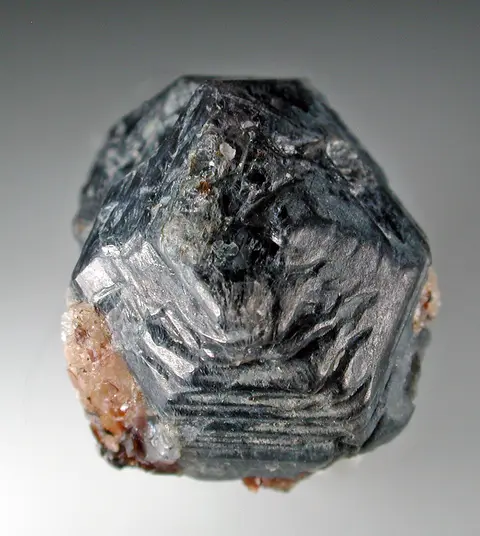
- Blue, greenish blue, violet or pink color, usually in small grains or crystals rather than large ones.
- Strong pleochroism: turning the stone shows a clear shift between blue or violet and a much paler or yellowish tone.
- Hardness about 7.5, so it scratches glass and quartz.
- Specific gravity about 3.4 to 3.6, noticeably heavier in the hand than iolite or quartz of the same size.
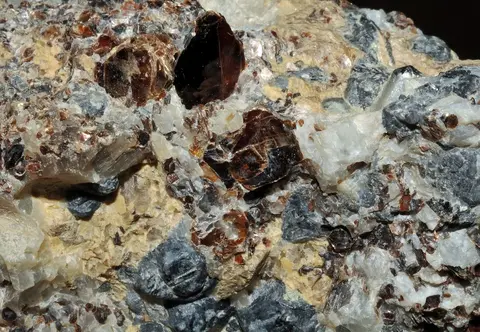
- In rough, it occurs as grains in granulite or similar metamorphic rock, often with corundum, spinel, cordierite or gedrite.
- Faceted stones are usually small; a large clean sapphirine is unusual.
Where sapphirine comes from
- Sri Lanka
- Source of most faceted blue and violet sapphirine, recovered from gem gravels along with other gem species.
- Madagascar
- Produces gem rough and collector crystals, including blue material.
- Fiskenaesset, Greenland
- Classic metamorphic locality where sapphirine occurs with corundum; mostly specimen grade.
- Tanzania
- Occasional gem material, including pink to purple sapphirine.
Sapphirine lookalikes
Sapphire is much heavier (SG about 4.0) and has a higher refractive index (about 1.76 to 1.77).
- Sapphire hardness 9 versus 7.5
- Sapphire shows hexagonal growth zoning and silk
- Pleochroism in sapphire is usually weaker
Iolite is much lighter (SG about 2.6) and has a lower refractive index (about 1.54).
- Both are strongly pleochroic violet blue
- Iolite hardness 7 to 7.5
- Iolite often looks gray to yellowish from one direction
Spinel is singly refractive and shows no pleochroism at all.
- Spinel SG about 3.6
- Spinel hardness 8
- Spinel RI about 1.72, close to sapphirine
Tanzanite is softer (6 to 7) and its pleochroism includes a distinct reddish or brownish direction.
- Tanzanite SG about 3.35
- Tanzanite RI about 1.69 to 1.70
- Tanzanite is usually heated and very evenly colored
Kyanite forms bladed crystals with perfect cleavage and a hardness that differs strongly with direction.
- Kyanite SG about 3.6
- Kyanite hardness 4.5 along the blade, 6.5 to 7 across it
Fake, dyed and treated sapphirine
Blue sapphire or synthetic sapphire mislabeled as sapphirine
Occasional
- Name confusion between sapphirine and sapphire leads to mixed parcels
- SG near 4.0 and RI near 1.76 point to corundum, not sapphirine
Blue or violet glass sold as a rare gem
Rare
- Round gas bubbles or swirl marks under a loupe
- No pleochroism
- Glass does not scratch quartz
Is my sapphirine real? Tests you can do at home
-
Pleochroism check
Hold the stone under white light and rotate it slowly, looking at it from several directions.
- Real
- Clear change between blue or violet and a paler, sometimes yellowish tone.
- Fake or lookalike
- Glass and spinel show the same color from every direction.
-
Specific gravity by water displacement
Weigh the stone dry on a kitchen scale reading to 0.01 g, then weigh a cup of water before and after hanging the stone in it on a thread. Divide dry weight by the gain.
- Real
- About 3.4 to 3.6.
- Fake or lookalike
- Iolite about 2.6, glass about 2.4 to 2.6 (lead glass higher), sapphire about 4.0. Results are unreliable on stones under a few carats.
-
Loupe inspection
Look through the stone with a 10x loupe for inclusions and polish quality.
- Real
- Natural crystals, fingerprints or tiny fractures; sharp facet edges.
- Fake or lookalike
- Round bubbles and rounded, slightly soft facet edges suggest glass.
A stone that passes these tests is consistent with natural sapphirine, not proven. For valuable pieces, a gem lab report settles treatment and origin.
Treatments
- None known as routine (rare)
- Sapphirine is sold untreated in nearly all cases, so treatment does not usually affect its value. A gem lab can confirm identity and check for fillings if a stone looks suspicious.
What moves the price of sapphirine
- Color. Saturated blue and violet stones are the most sought after; gray or very pale stones are worth much less.
- Size. Clean stones above a carat or two are scarce, so size moves value sharply.
- Clarity. Eye-clean material is uncommon; visible fractures lower value.
- Identification paperwork. Because it is rare and easily confused, a lab report adds buyer confidence.
- Locality. Sri Lanka and Madagascar origins are familiar to collectors of rare gems.