RockValues

Lodestone value and identification

Lodestone is magnetite that is naturally magnetized strongly enough to pick up iron objects and act as a compass. It was the first magnet known to people.

A variety of magnetite. Prices checked .

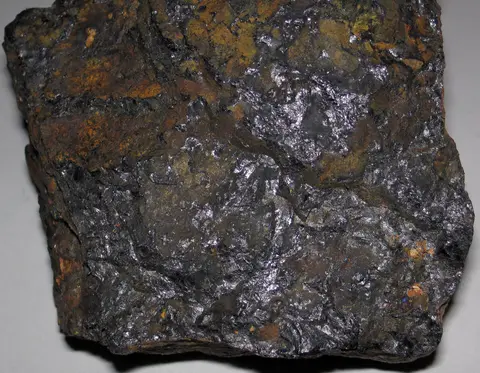
Lodestone: Lodestone (Magnet Cove Complex, mid-Cretaceous, 96-102 Ma; Magnet Cove, Arkansas, USA) 2
Lodestone (Magnet Cove Complex, mid-Cretaceous, 96-102 Ma; Magnet Cove, Arkansas, USA) 2. Photo: James St. John, CC BY 2.0, via Wikimedia Commons.
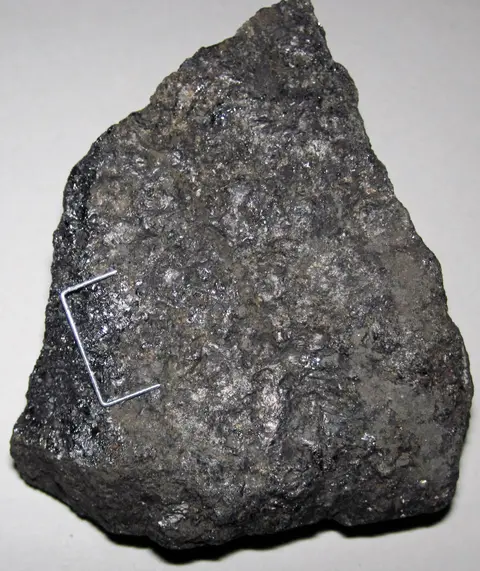
Lodestone: Lodestone (Adirondack Mountains, New York State, USA) 3
Lodestone (Adirondack Mountains, New York State, USA) 3. Photo: James St. John, CC BY 2.0, via Wikimedia Commons.
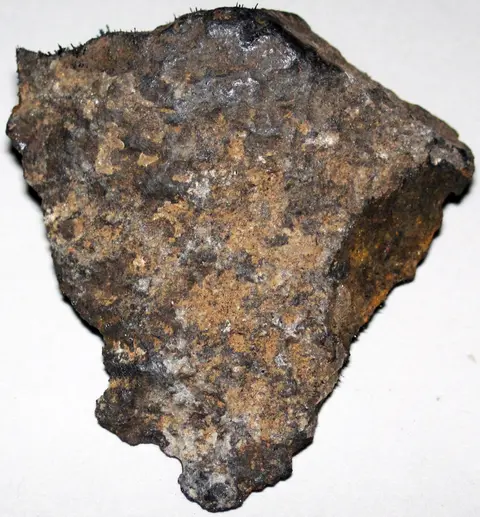
Lodestone: Lodestone (Hot Spring County, Arkansas, USA) 2
Lodestone (Hot Spring County, Arkansas, USA) 2. Photo: James St. John, CC BY 2.0, via Wikimedia Commons.
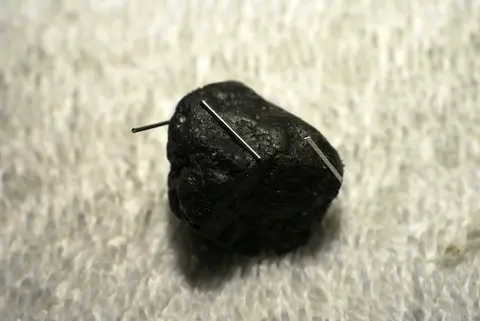
Lodestone: Lodestone (black)
Lodestone (black). Photo: Teravolt ( talk ), CC BY 3.0, via Wikimedia Commons.

What lodestone is worth

Not enough data. We have not yet seen 5 or more current dealer listings for lodestone in any one form, so we show no range rather than guess.

These are dealer asking prices: what shops list lodestone for, not what it sells for and not an appraisal. Selling to a dealer usually brings well below retail, because the dealer has to resell it at a margin.

How to identify lodestone

Same mineral as magnetite; ordinary magnetite is attracted to a magnet, while lodestone is itself a permanent magnet. Lightning strikes are the leading explanation for its magnetization. See magnetite value for the species as a whole.

  • Picks up paper clips, nails or iron filings by itself
  • Iron filings cluster in tufts at its poles
  • Black, heavy and metallic to dull like other magnetite
  • Usually massive or granular, not crystals

Where lodestone comes from

Magnet Cove, Arkansas, USA
Well known source of natural lodestone.
Iron ore deposits worldwide
Lodestone occurs near the surface of magnetite deposits, where lightning is thought to magnetize it.

Lodestone lookalikes

Man-made ferrite magnets

Ferrite magnets are uniform gray to black ceramic with regular shapes and very strong, even poles.

  • Molded or cut shapes
  • Granular ceramic interior at chips

Fake, dyed and treated lodestone

  • Artificially magnetized magnetite sold as lodestone

    Occasional

    • Usually not detectable at home
    • Pieces with unusually strong, even poles deserve suspicion
  • Ferrite magnet chunks

    Occasional

    • Uniform texture
    • Gray granular breaks
    • Very strong pull for the size

Is my lodestone real? Tests you can do at home

  1. Paper clip pickup

    Touch the stone to a loose paper clip or a pinch of iron filings.

    Real
    Lifts the clip or gathers filings at its poles.
    Fake or lookalike
    Ordinary magnetite does not lift anything.
  2. Streak plate

    Rub a corner on unglazed porcelain.

    Real
    Black streak.
    Fake or lookalike
    Hematite streaks red-brown.

    Can leave a small mark.

  3. Compass check

    Bring a compass near different sides of the stone.

    Real
    The needle swings toward different ends, showing north and south poles.
    Fake or lookalike
    Non-magnetized stones only attract the needle weakly from all sides.

A stone that passes these tests is consistent with natural lodestone, not proven. For valuable pieces, a gem lab report settles treatment and origin.

Treatments

Artificial magnetizing (occasional)
Creates a lodestone from ordinary magnetite; not the same as a natural piece. Provenance only.
Iron filing coating (common)
Lodestones are often sold dusted with iron filings to show the poles; this is presentation, not a defect. Visible black fuzz of filings.

What moves the price of lodestone

  1. Strength. Pieces that lift heavier iron objects are more desirable.
  2. Natural origin. Documented natural lodestone ranks above magnetized magnetite.
  3. Size and shape. Larger, attractive pieces sell better.

Sources

Prices: no current dealer listings yet. How we collect prices.