RockValues

Cuprite value and identification

Cuprite is copper(I) oxide, Cu2O, a secondary copper mineral that forms where copper deposits weather. It is deep red with bright, almost metallic luster and is one of the richest copper ores by weight.

Prices checked . Page updated .
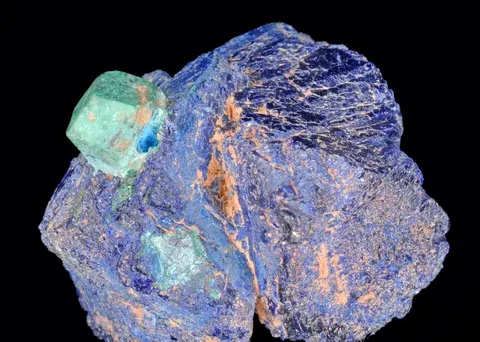
Cuprite: Cuprite, azurite 2
Cuprite, azurite 2. Photo: Parent Géry, CC BY-SA 3.0, via Wikimedia Commons.
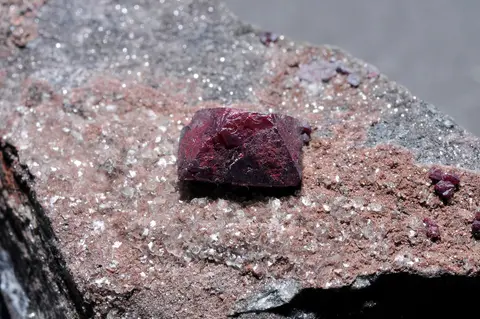
Cuprite: Cuprite, calcite
Cuprite, calcite. Photo: Parent Géry, CC BY-SA 3.0, via Wikimedia Commons.
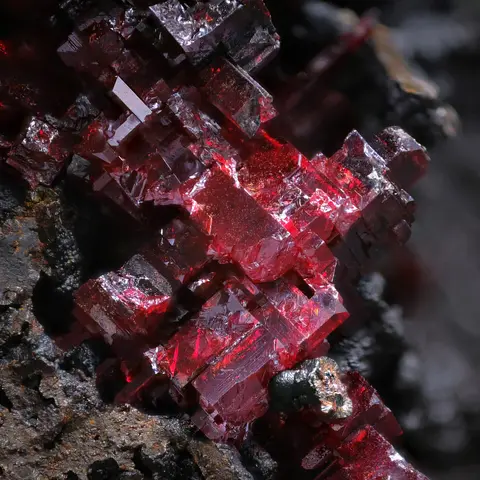
Cuprite: Cuprite crystals
Cuprite crystals. Photo: Masha Milshina, CC BY 4.0, via Wikimedia Commons.
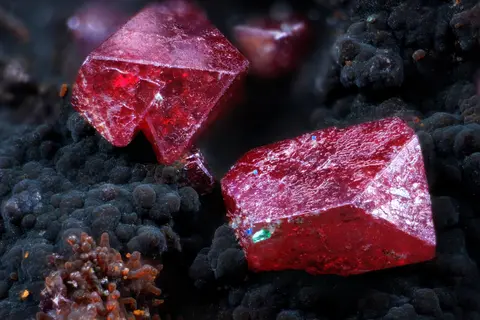
Cuprite: Cuprite crystal
Cuprite crystal. Photo: Masha Milshina, CC BY 4.0, via Wikimedia Commons.

What cuprite is worth

Not enough data. We have not yet seen 5 or more current dealer listings for cuprite in any one form, so we show no range rather than guess.

Show 9 of the listings behind these numbers
Sample dealer listings for Cuprite
ListingSizeLocalityAskingSeen
2.3" Natural, Native Copper with Cuprite - Carissa Pit, Nevada
FossilEra
5.8 cmCarissa Pit, Nevada$12
2.15" Natural, Native Copper with Cuprite - Carissa Pit, Nevada
FossilEra
5.5 cmCarissa Pit, Nevada$12
2.6" Natural, Native Copper with Cuprite - Carissa Pit, Nevada
FossilEra
6.6 cmCarissa Pit, Nevada$15
Vesignieite with Cuprite #57641
Dakota Matrix Minerals
6.5 cmHorni Kalna, Nová Paka, Hradec Králové, Bohemia, Czech Republic$30
Cuprite and Crysacola 26 carat Teardrop Cab
Trade Roots
26 ct$116
Copper with Cuprite #65518
Dakota Matrix Minerals
9 cmRudabánya, Hungary$125
Cuprite and Crysacola 44 carats
Trade Roots
44 ct$176
Cuprite and Crysacola 48 carats
Trade Roots
48 ct$192
Cuprite
iRocks (The Arkenstone)
4.7 cmPoteryaevskoe Mine, Rubtsovskoe, Rudnyi Altai, Western-Siberian Region, Russia$4,200

These are dealer asking prices: what shops list cuprite for, not what it sells for and not an appraisal. Selling to a dealer usually brings well below retail, because the dealer has to resell it at a margin.

How to identify cuprite

  • Very dark red crystals that look almost black until light shines through edges, showing crimson red.
  • Adamantine to submetallic luster, brighter than most red minerals.
  • Streak is brownish red, shiny on the porcelain.
  • Octahedrons, cubes and dodecahedrons, or felted masses of hair-like red fibers (chalcotrichite).
  • Heavy (SG about 6.1) and soft enough for a knife to scratch (3.5 to 4).
  • Usually with native copper, malachite, azurite or limonite; crystals are often partly or fully replaced by green malachite.

Cuprite varieties

Chalcotrichite

Chalcotrichite is cuprite grown as fine, hair-like red fibers that form felted mats and sprays. It is the same copper oxide as cuprite but grows as elongated capillary crystals, giving bright red velvety masses instead of chunky dark octahedra.

Where cuprite comes from

Onganja mine, Namibia
Large, lustrous octahedral crystals, some clear enough to facet; the source of most cut cuprite.
Mashamba West mine, Katanga, DR Congo
Large, sharp crystals and some gem-grade material.
Chessy-les-Mines, Rhone, France
Classic octahedrons, often altered to malachite pseudomorphs.
Bisbee and Ray, Arizona, USA
Cuprite with native copper and fine chalcotrichite.
Cornwall, England
Historic cuprite specimens from old copper mines, common in older collections.

Cuprite lookalikes

Cinnabar

Cinnabar gives a scarlet streak and is softer and much heavier.

  • Cinnabar hardness 2 to 2.5
  • Cinnabar SG 8.1
  • Cinnabar crystals are rhombohedral or tabular

Proustite

Proustite has a bright scarlet streak and is softer, usually as prisms rather than octahedra.

  • Proustite hardness 2 to 2.5
  • SG 5.6

Hematite

Hematite is steel gray to black with a red-brown streak and is harder.

  • Hardness 5.5 to 6.5
  • SG 5.3
  • Never shows transparent red edges

Almandine garnet

Garnet scratches glass and gives a white streak.

  • Hardness 7 to 7.5
  • SG 4.1

Also mistaken for cuprite: realgar, pyrargyrite.

Fake, dyed and treated cuprite

  • Oiled cuprite crystals

    Occasional

    • Wet-looking luster
    • Oily residue in recesses
    • Dust sticks to surfaces
  • Re-attached crystals on copper matrix

    Occasional

    • Glue lines at crystal bases
    • Crystals that do not grow from the matrix

Is my cuprite real? Tests you can do at home

  1. Streak test

    Rub a hidden corner on the back of an unglazed porcelain tile.

    Real
    Brownish red, slightly shiny streak.
    Fake or lookalike
    Cinnabar and proustite give bright scarlet; garnet gives white.

    Can leave a small mark.

  2. Backlight check

    Shine a strong flashlight through a thin edge or small crystal.

    Real
    Glows deep crimson red.
    Fake or lookalike
    Hematite stays opaque black.
  3. Knife scratch test

    Try a steel knife on a hidden spot.

    Real
    Scratches with moderate pressure.
    Fake or lookalike
    Garnet and hematite resist; cinnabar scratches very easily.

    Can leave a small mark.

  4. Weight in hand

    Compare it with a quartz pebble of similar size.

    Real
    Feels more than twice as heavy.
    Fake or lookalike
    Garnet feels lighter; cinnabar feels heavier still.

A stone that passes these tests is consistent with natural cuprite, not proven. For valuable pieces, a gem lab report settles treatment and origin.

Treatments

Oiling (occasional)
Brightens tarnished surfaces; disliked by collectors. Greasy feel and residue.

What moves the price of cuprite

  1. Luster and color. Bright crystals that show red internal reflections, not dull gray tarnish.
  2. Crystal size and form. Large, sharp octahedra or well-formed chalcotrichite sprays.
  3. Locality. Onganja and Mashamba West crystals and Chessy pseudomorphs are classic.
  4. Associations. Cuprite with native copper or partial malachite alteration can add interest.
  5. Gem quality. Faceted cuprite is very rare and collected as a curiosity because it is too soft for wear.

Care and safety

Store cuprite away from strong light, which can darken the surface, and avoid cleaning with acids.

Sources

Prices: 9 current listings from Dakota Matrix Minerals, FossilEra, iRocks (The Arkenstone), Trade Roots, seen 2026-11-20 to 2026-11-20. How we collect prices.