RockValues

Chalcedony vs moonstone

Chalcedony is evenly translucent with no moving sheen.

Side by side

Physical properties that separate chalcedony from moonstone.
PropertyChalcedonyMoonstone
Hardness (Mohs)6.5 to 76 to 6.5
Specific gravity2.58 to 2.642.56 to 2.59
LusterWaxy to vitreousVitreous, pearly on cleavage
StreakWhiteWhite
Crystal systemTrigonal (microcrystalline)Monoclinic
CleavageNonePerfect in one direction, good in a second, at or near 90 degrees
Refractive index1.53 to 1.541.518 to 1.526
FormulaSiO2KAlSi3O8 with exsolved NaAlSi3O8
Typical dealer asking price$25 to $55 (geodes and nodules)$91 to $173 (tumbled stones)
1 2 3 4 5 6 7 8 9 10 Fingernail Copper Glass Steel file
Chalcedony: Mohs 6.5 to 7. Scratches fingernail, copper, glass, steel file.
1 2 3 4 5 6 7 8 9 10 Fingernail Copper Glass Steel file
Moonstone: Mohs 6 to 6.5. Scratches fingernail, copper, glass. Is scratched by steel file.

How to tell them apart

Photos of each

Chalcedony

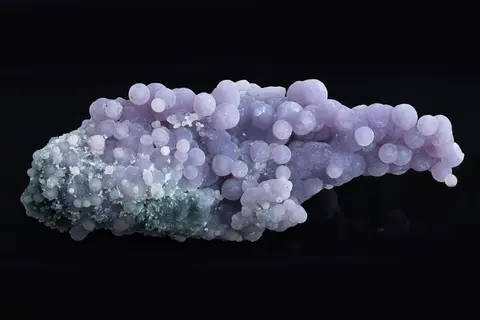
Chalcedony: Botryoidal Purple Grape Agate Chalcedony from Indonesia
Botryoidal Purple Grape Agate Chalcedony from Indonesia. Photo: JJ Harrison ( https://www.jjharrison.com.au/ ), CC BY-SA 4.0, via Wikimedia Commons.
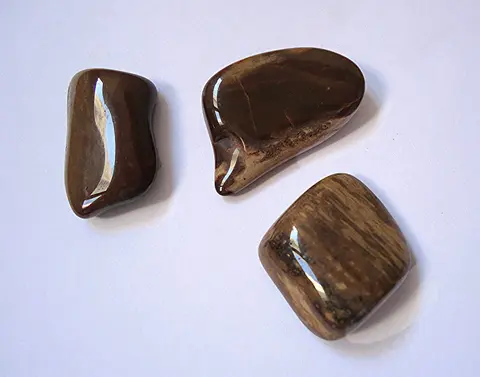
Chalcedony: Brown chalcedony, Brazil (9393342871)
Brown chalcedony, Brazil (9393342871). Photo: MAURO CATEB from Brazil, CC BY 2.0, via Wikimedia Commons.

Moonstone

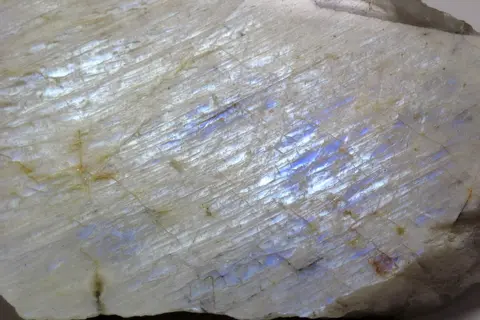
Moonstone: Moonstone (iridescent peristerite-oligoclase feldspar) (Chupa Pegmatite Field, Mesoproterozoic, 1.75 to 2.10 Ga; at or near Chupa Bay, Karelia, Russia) 2
Moonstone (iridescent peristerite-oligoclase feldspar) (Chupa Pegmatite Field, Mesoproterozoic, 1.75 to 2.10 Ga; at or near Chupa Bay, Karelia, Russia) 2. Photo: James St. John, CC BY 2.0, via Wikimedia Commons.
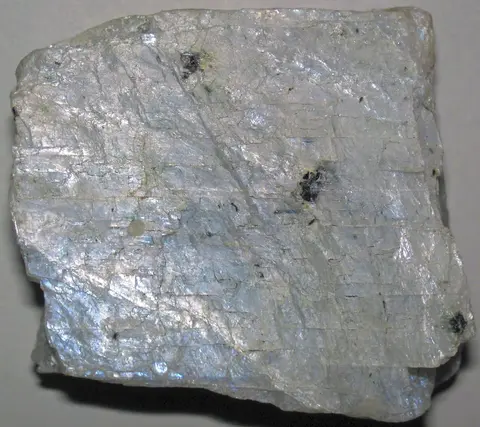
Moonstone: Moonstone (iridescent sodic feldspar) 3
Moonstone (iridescent sodic feldspar) 3. Photo: James St. John, CC BY 2.0, via Wikimedia Commons.

More on each: chalcedony value and identification and moonstone value and identification.